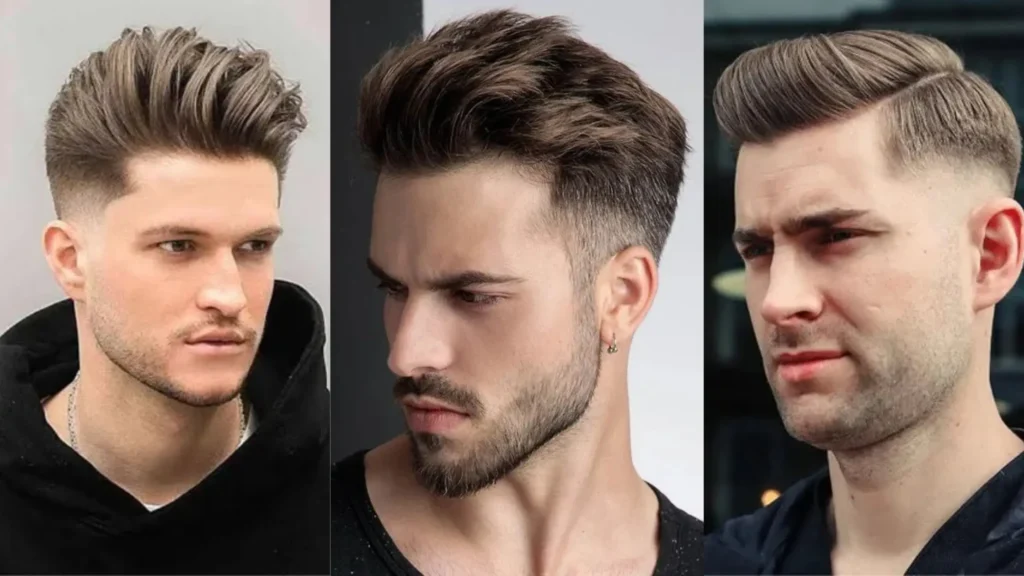
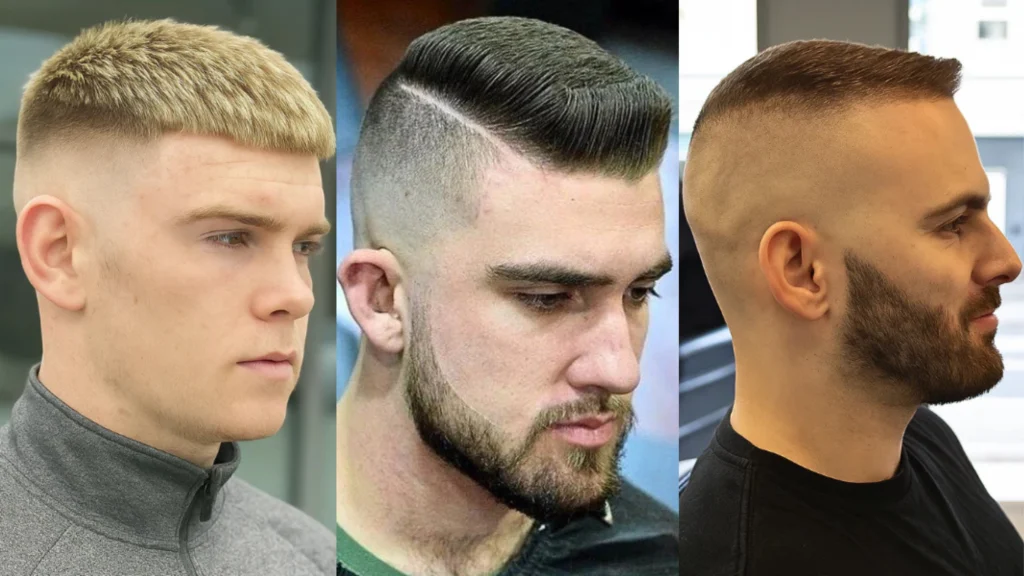
Ever sat down in the barber’s chair, got asked “taper or fade?”, and just froze for a second? You’re not the only one. These two haircuts get mixed up all the time, even by barbers who throw the words around like they mean the same thing. They don’t. A taper and a fade are cousins, not twins, and knowing which is which is honestly the difference between loving your haircut and quietly regretting it on the walk home.
So let’s clear it up for good. In this guide we’ll break down the whole taper vs fade thing in plain English, show you what each cut actually looks like on the head, and talk through the stuff that really matters when you’re deciding: how much upkeep you can handle, how bold you want to look, and what suits your hair. Read it once and you’ll never freeze in that chair again.
Taper vs Fade: The Short Answer
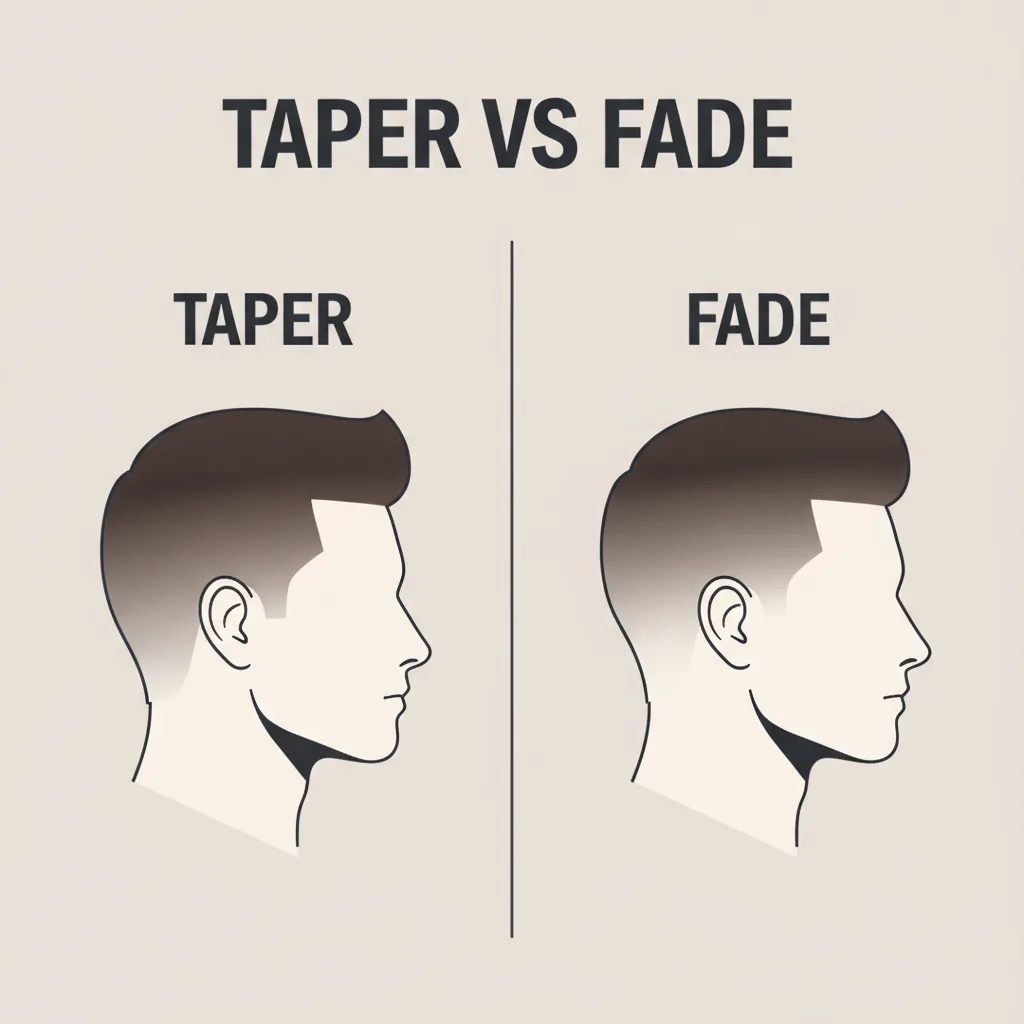
If you only remember one thing, make it this. A taper makes your hair shorter as it goes down, but it never takes it all the way off. A fade keeps going until there’s nothing left but bare skin. That’s really the whole difference in a nutshell. A taper leaves a soft little gradient with hair still there at the bottom. A fade blends right down to the scalp so you can see skin at the lowest point. Funny enough, a fade is basically just a taper taken to the extreme, so every fade is a type of taper, but plenty of tapers never become fades.
What Is a Taper Haircut?
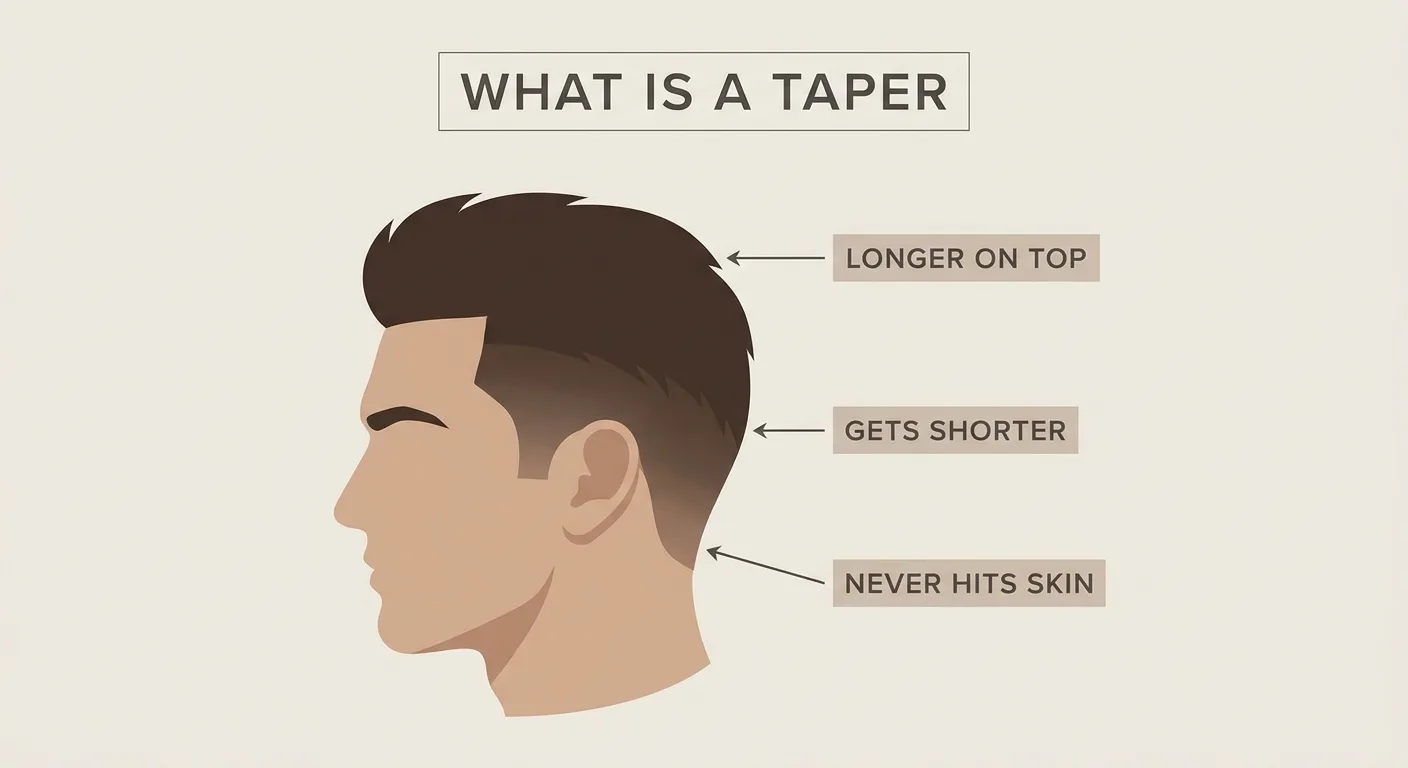
A taper is when your hair slowly gets shorter from the top of your head down toward your neckline and around your ears. The key word there is slowly. It never gets cut down to the skin, it just eases shorter and shorter until it blends into your hairline. You’ll notice it most around the sideburns and the back of the neck, which is why a quick trim that just tidies up those spots usually gets called a taper.
Because there’s always a bit of hair left at the edges, a taper reads as clean and low-key rather than flashy. It’s the safer, more office-friendly pick, and it’s great if your workplace leans a little formal. The other big perk is that it grows out nicely. You can stretch an extra week or two between barber visits and still look put together. Classic tapers, the temple area taper, and textured tapers that work with longer hair on top are all popular for a reason. If you want something sharp that doesn’t demand much from you, this is it.
What Is a Fade Haircut?
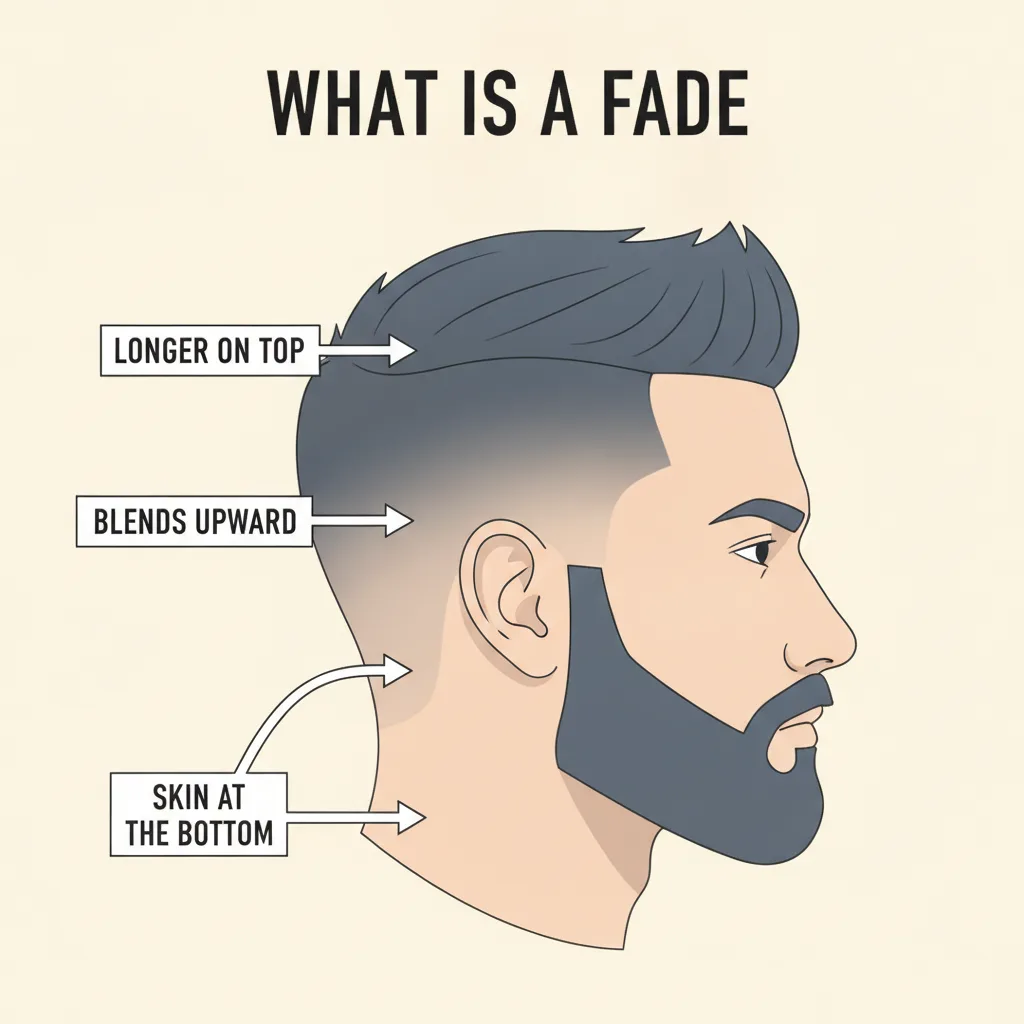
A fade takes that same idea and pushes it all the way. Instead of leaving short hair down low, it blends your hair from long on top right down to bare skin on the sides and back. The result is bold and high-contrast, with that smooth, almost airbrushed look where you can’t spot a single line. Barbers pull it off by working through clipper guards, dropping a size at a time, then blending out every harsh edge until it all melts together.
Fades just hit harder than tapers. They’re sharper, more modern, and they grab attention, which makes them the obvious choice when you want a real statement. They also play beautifully with longer or textured hair up top. The catch is upkeep. Since the bottom fades to skin, it starts looking fuzzy within a couple of weeks as the hair creeps back. If you live for that fresh-from-the-shop feeling, you’ll be back in the chair often. Some of the most popular versions are the high fade, the skin fade, the drop fade, and the burst fade.
Taper vs Fade: The Real Differences
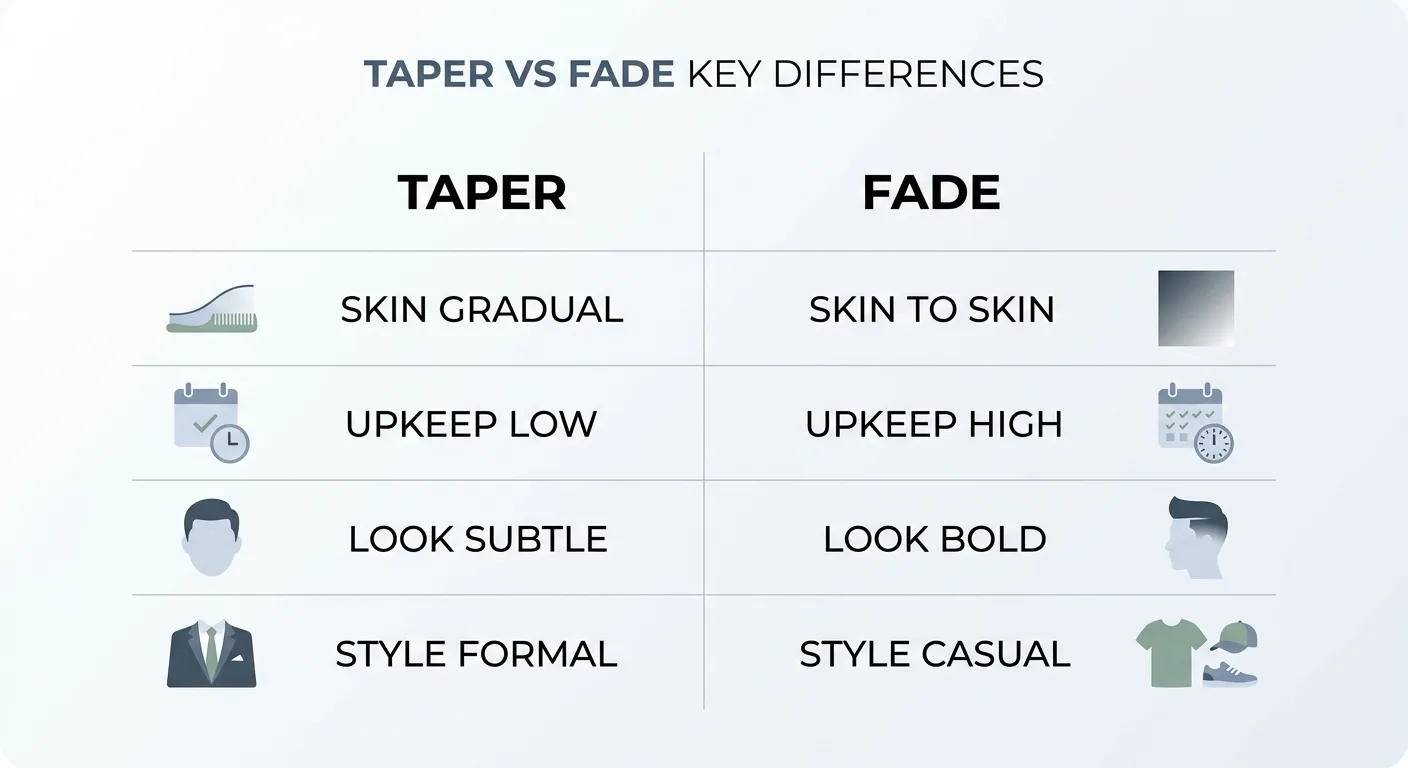
They come from the same family, but when you put a taper vs fade side by side, a few things really set them apart. Here’s the quick rundown:
| Factor | Taper | Fade |
|---|---|---|
| Shortest point | Short hair, no skin | Bare, exposed skin |
| Overall look | Subtle and natural | Bold and high-contrast |
| Best for | Professional, classic styles | Modern, statement styles |
| Maintenance | Low, every 3 to 5 weeks | High, every 1 to 2 weeks |
| Grows out | Gracefully | Loses its edge fast |
| Skill to cut | Moderate | High, needs clean blending |
Honestly, it all boils down to one thing: can you see scalp or not? If there’s skin showing at the bottom, it’s a fade. If the hair just gets short but still covers everything, it’s a taper. The boldness, the upkeep, how formal it looks, all of that follows from that single detail.
Types of Fades
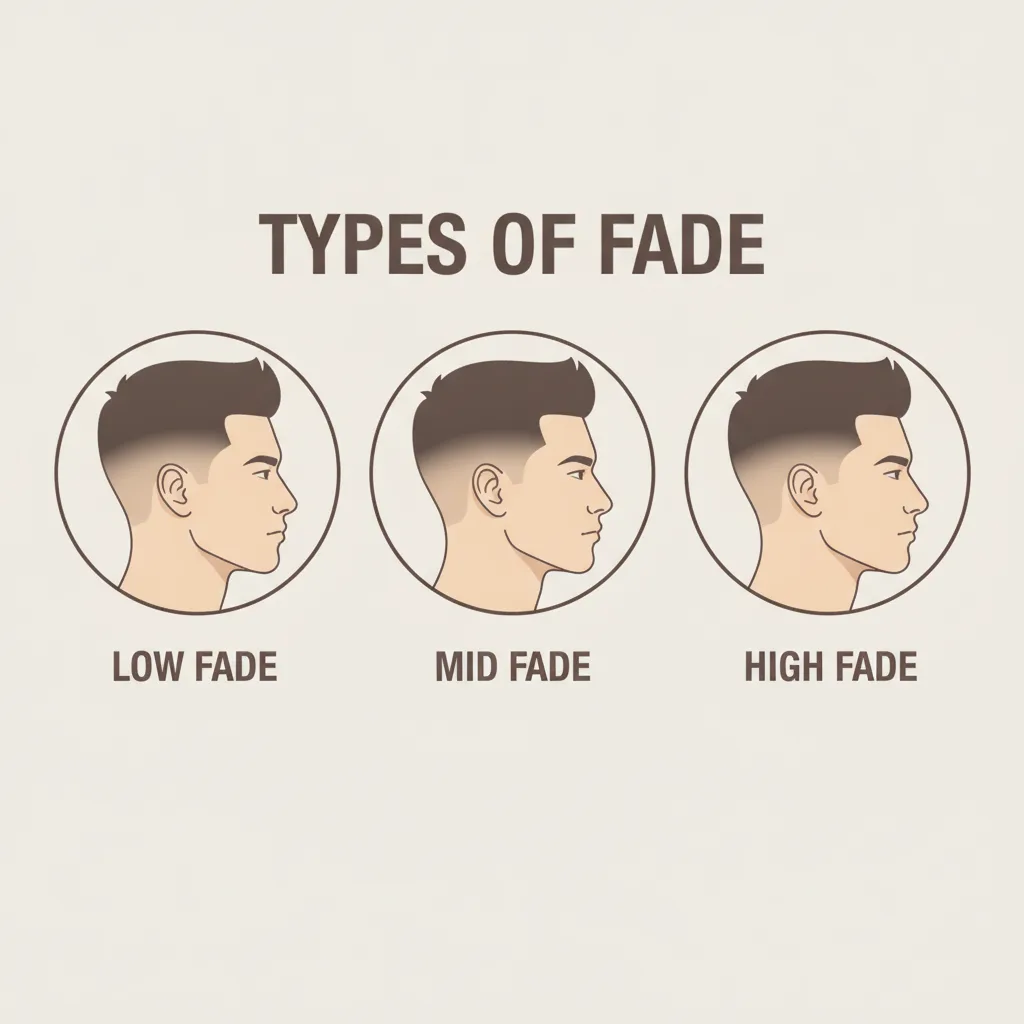
Fades get their names from how high up the head the blend kicks off. The higher it starts, the bigger the contrast and the bolder the cut feels:
- Low fade. Starts just above the ears and around the neckline. It’s the most subtle of the bunch and keeps things clean without shouting.
- Mid fade. Kicks in around the temples. It sits right in that sweet spot between bold and easy to wear, which is why so many guys land here.
- High fade. Begins up near the crown for maximum contrast and a really sharp, modern edge.
- Skin fade (or bald fade). Goes all the way down to smooth, razored skin for the cleanest finish you can get.
Each height plays differently with whatever you’ve got on top. A high fade makes a textured quiff or a comb over really stand out, while a low fade keeps the whole thing understated. If you want some short and sharp ideas to show your barber, our roundup of high taper fade short hair styles is a solid place to start.
Types of Tapers
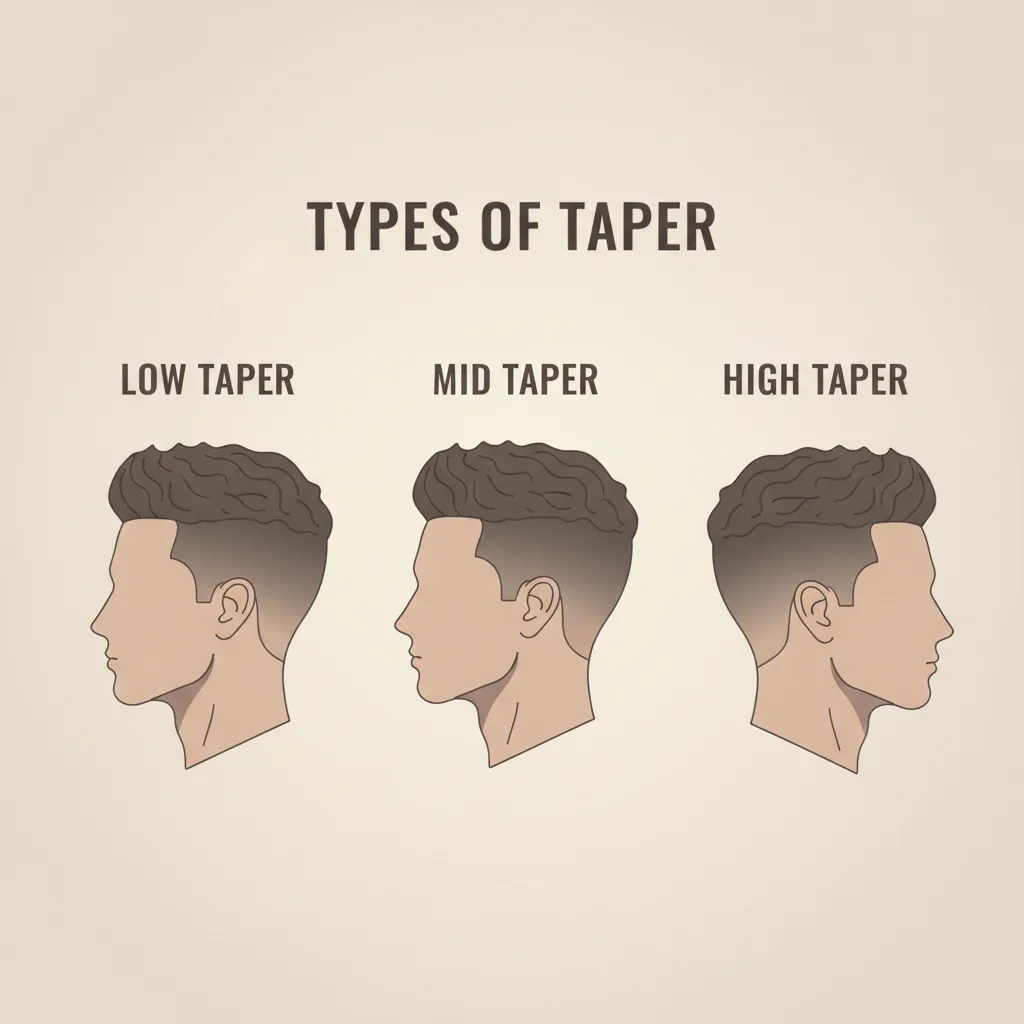
Tapers follow the same low, mid, and high idea, but since they never touch skin, the difference between them is gentler:
- Low taper. A soft, subtle drop around the ears and nape. Perfect when you want something tidy and professional that grows out clean.
- Mid taper. Starts a touch higher for a little more shape, while staying versatile enough for pretty much anyone.
- High taper. The boldest of the three, climbing higher up the sides for more contrast, but still without ever showing skin.
Tapers are easy to build on. They look great with longer styles like a mid taper fade, a textured crop, even a mullet. Because the blend is so soft, a taper flatters just about every hair type and face shape, which is a big part of why it never really goes out of style.
Maintenance and Upkeep
This is where the taper vs fade choice gets real. A taper is the easier one to live with, no contest. There’s always hair at the edges, so it grows out evenly and still looks intentional weeks later. Most guys can comfortably go three to five weeks between trims and nobody’s the wiser.
A fade asks more of you. That skin at the bottom fills back in quickly, and after a week or two the crisp edge starts to blur. To keep it looking its best you’re really looking at a touch-up every one to two weeks. If you don’t have the time or the budget for that, be honest with yourself before you commit, because this one factor trips up more guys than anything else.
So Which One Should You Get?
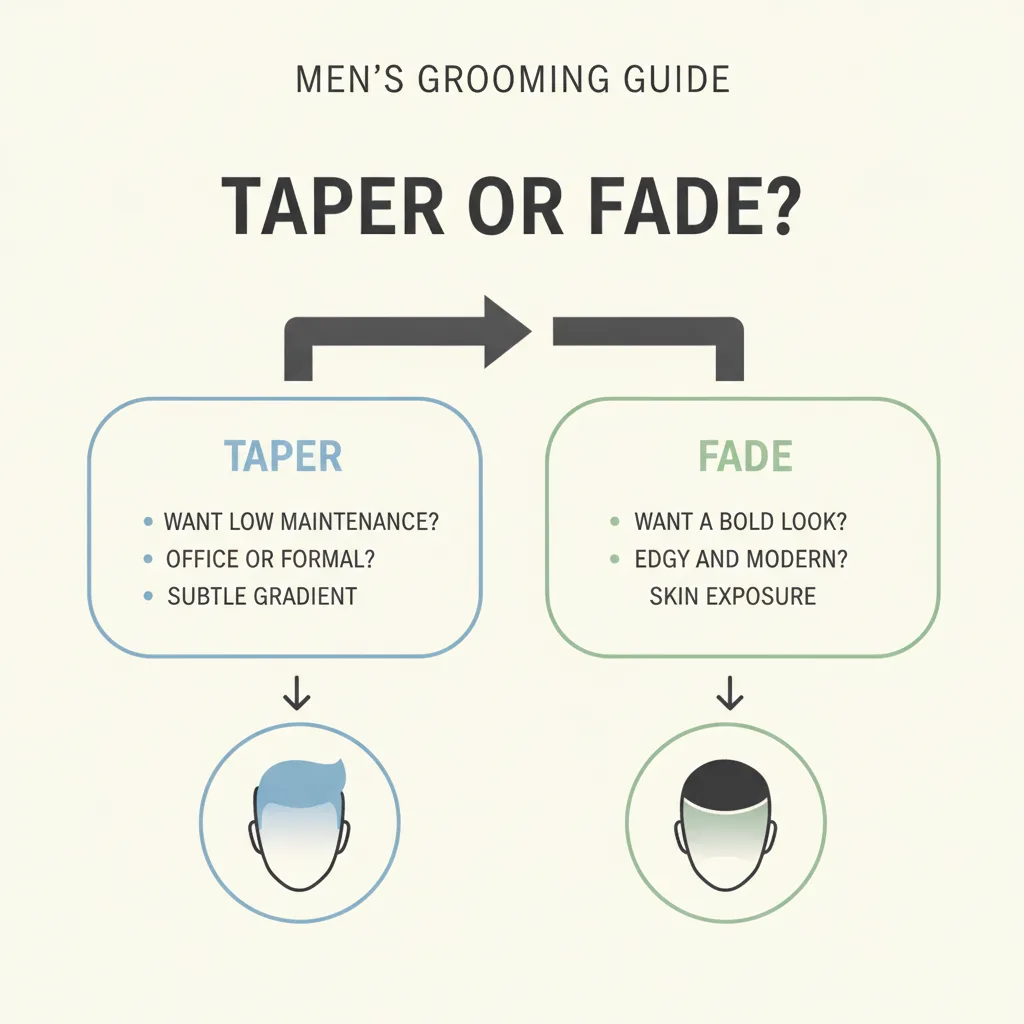
There’s no winner here, just the one that fits your life. A few simple pointers to help you call it:
- Go with a taper if you’d rather not babysit your hair, you work somewhere on the formal side, you like a natural look, or you just hate booking barber appointments.
- Go with a fade if you want something bold and modern that turns a few heads, and you’re cool with regular touch-ups to keep it crisp.
- Think about your face. A high fade adds height and can stretch out a rounder face, while a low taper keeps everything soft and balanced.
- Think about your hair. Both work on straight, wavy, curly, and coily hair, but fades in particular love to show off texture on top.
Can You Have Both? Meet the Taper Fade
You absolutely can, and that’s exactly what the taper fade is. It fades the hair shorter as it drops down, but it keeps the actual tapering tucked neatly around the ears and neckline instead of running up the whole side of your head. You end up with something cleaner and a bit bolder than a plain taper, but easier to maintain than a full-blown fade. That balance is a big reason it’s become the default men’s haircut you see everywhere right now.
The taper fade also bends to fit almost any style on top, and it looks especially good with a bit of facial hair. If that’s your vibe, take a look at our guide to the taper fade with beard for some inspiration. When you genuinely can’t decide between the two, the taper fade is usually the answer.
Quick Styling Tips
Whichever way you go, the right products make a difference. Reach for a matte clay or paste if you want a natural, textured finish, or a pomade if you’re after something sleeker and shinier. Blow-drying your hair into shape before you add any product gives you more volume and way more control. Keep your hairline and neckline tidy between visits with a trimmer, and always tell your barber the exact height you’re after. A reference photo helps more than any explanation, so save a couple on your phone. And don’t sleep on the basics either, because healthy hair on top is what makes the contrast of a taper or fade actually pop.
How to Ask Your Barber For It
The quickest way to walk out happy is to speak your barber’s language. Instead of just saying “taper” or “fade,” be clear about three things: the type, the height, and how much length you want left on top. Something like “a mid fade, leave a couple inches up top with a hard part” tells them everything. Mentioning whether you want skin showing at the bottom instantly sorts out whether you mean a true fade or a taper. Not sure about the height? Just point to the spot on the side of your head where you’d like the blend to start, low by the ear, mid around the temple, high up near the crown.
That photo on your phone is still your best friend. Barbers are visual people, and one clear picture clears up almost everything that gets lost in a verbal description. It’s also worth being upfront about your routine. If you barely touch your hair in the morning, a softer taper that grows out well is going to serve you better than a high-maintenance skin fade you can’t keep up with.
Mistakes to Watch Out For
The classic slip-up is picking a fade without thinking about upkeep, then getting annoyed when it looks scruffy two weeks later. If you can’t commit to regular trims, a taper will keep you looking sharp for longer. Another one is going too high too soon. A high fade is dramatic, and if it’s your first rodeo, a low or mid option is far easier to live with. Last thing, don’t forget about the hair on top. Both cuts are all about contrast, so a well-styled, healthy top is what makes everything look deliberate instead of accidental. Match your length up there to how bold the sides are and your taper vs fade will always look its best.
Frequently Asked Questions
Is a taper or fade better?
Neither one is just better, it depends on what you want. A taper wins for low maintenance, formal settings, and a natural look. A fade wins if you want something bold and sharp and you don’t mind frequent touch-ups.
What is the main difference between a taper and a fade?
It comes down to skin. A fade blends all the way down to bare skin, while a taper just shortens the hair gradually and always leaves a little length at the edges.
Does a fade need more maintenance than a taper?
Yes, by a fair bit. A fade needs a touch-up roughly every one to two weeks to stay crisp, while a taper can easily go three to five weeks because it grows out more evenly.
What is a taper fade?
It’s a hybrid that fades the hair shorter while keeping the tapering focused around the ears and neckline. You get some of the boldness of a fade with some of the easy upkeep of a taper.
Bottom Line
When it comes to taper vs fade, it really does come back to one question: do you want hair at the bottom of your cut, or skin? A taper keeps it soft, natural, and easy. A fade goes bold, sharp, and skin-deep. Both have been around forever, both suit every hair type, and if you still can’t pick, the taper fade quietly gives you a bit of both. Now that you know the difference, you can book your next appointment and ask for exactly what you want. If you’re after more ideas and barber tips, have a browse through our full collection of taper and fade haircut guides.