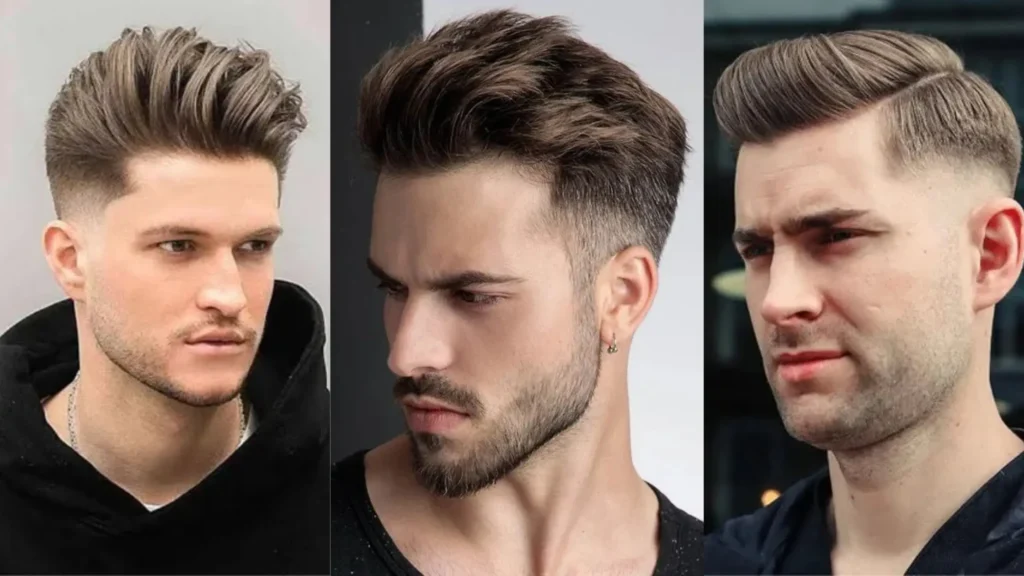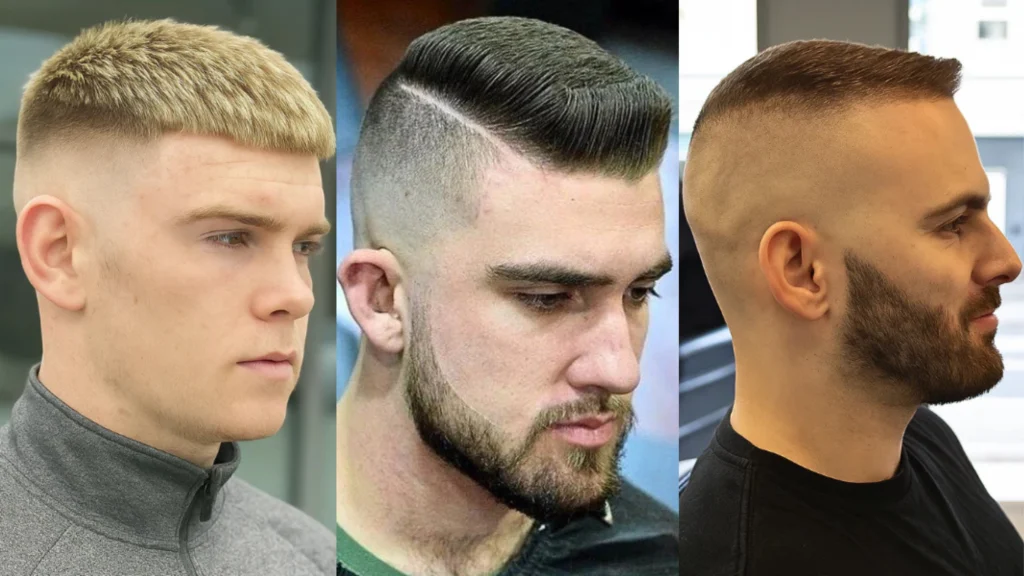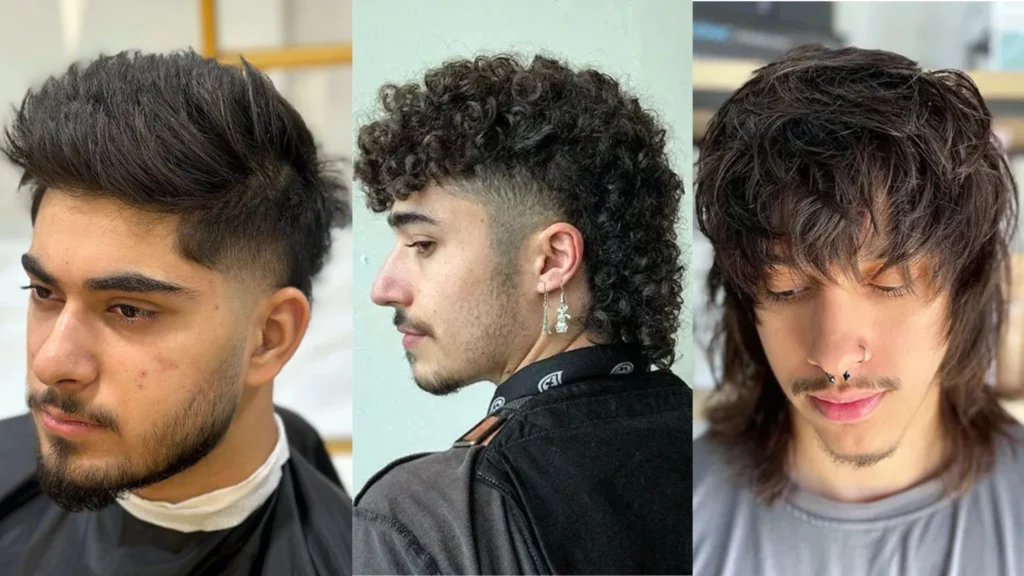
If you thought the mullet had faded into the past, think again. The low taper fade mullet is back, and this time it’s sharper, cleaner, and more wearable than ever. It takes the rebellious energy of the classic mullet and pairs it with the precision of a low taper fade — nostalgic but current.
What makes it so popular in 2026 is the balance: business in the front, style in the back, but with sleek transitions and clean edges. The fade begins just above the ears and flows into longer layers at the back, giving shape, movement, and attitude without the roughness of the old-school version.
It celebrates a bit of individuality. Straight, wavy, or curly, it adapts to your texture and lifestyle — polished for work, textured for weekends, or bolder for nights out. Versatile, low-maintenance, and built to stand out without much effort.
In this guide you’ll see how the low taper fade mullet became one of the year’s defining cuts, explore its best variations, learn which version suits your face shape and hair type, and get barber tips to keep it sharp. It’s more than a haircut — it’s the return of an attitude.
What Exactly Is a Low Taper Fade Mullet?
A low taper fade mullet combines two icons — the sharp taper fade and the classic mullet — into one balanced style. The fade starts just above the ears and blends gently into the neckline for a clean, structured front, while the back flows freely. Polished yet rebellious: precise on the sides, relaxed at the back, for guys who want a modern edge without losing that easy cool.
Why It Works So Well
It works because it balances contrast — clean edges meet natural flow. The taper keeps the sides sharp and easy to maintain while the mullet adds movement, texture, and individuality. It flatters almost every face shape and suits straight, wavy, or curly hair. Neat or tousled, it reads confident — modern, masculine, and in control.
Key Benefits
- Clean, structured look that sharpens your features
- Works with all hair types — straight, wavy, or curly
- Low-maintenance and grows out neatly
- Adds movement and volume without losing shape
- Keeps the neckline tidy while preserving length and texture
Recommended Products for a Mullet
Things to Keep in Mind
- Ask your barber to keep the fade low and natural, too high and it loses the mullet shape
- Use matte clay or sea salt spray for texture instead of heavy gels
- Trim every 2–3 weeks to maintain clean taper lines
- Humid weather can puff up the back, use lightweight styling cream for control
- Always blend the neckline smoothly to keep the look modern, not messy
Table of Contents
Classic Low Taper Fade Mullet
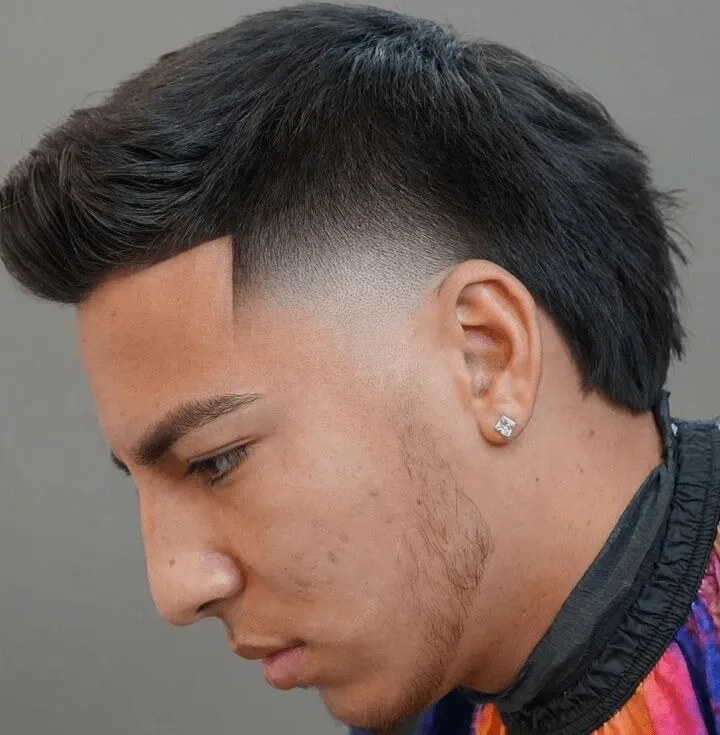
Every great style starts somewhere, and this is the foundation. The classic low taper fade mullet keeps everything balanced — a soft taper into the neckline with that subtle mullet charm at the back. It doesn’t shout for attention but earns it quietly: clean, timeless, and adaptable, adding structure to round faces and edge to softer ones. If you’re testing the trend for the first time, start here.
Curly Low Taper Mullet Fade
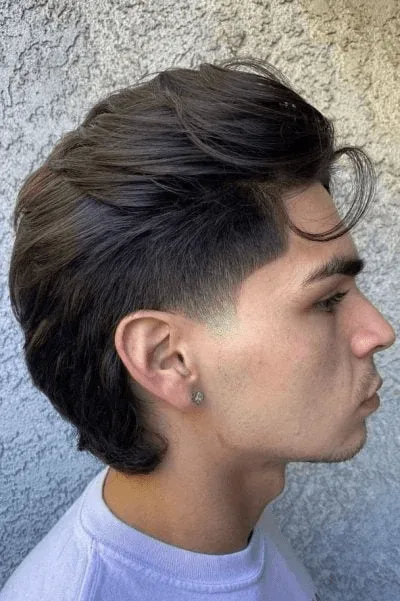
Once you’ve got the classic, add texture. The curly low taper mullet brings out the natural rhythm of curls without letting them overpower the face. The fade frames the look, controlling the volume while keeping the curls lively. A little curl cream or sea salt mist defines each twist — confidence and control in one. Guys with tighter curls should also check out our afro taper fade haircuts.
Asymmetrical Mullet Low Taper Fade
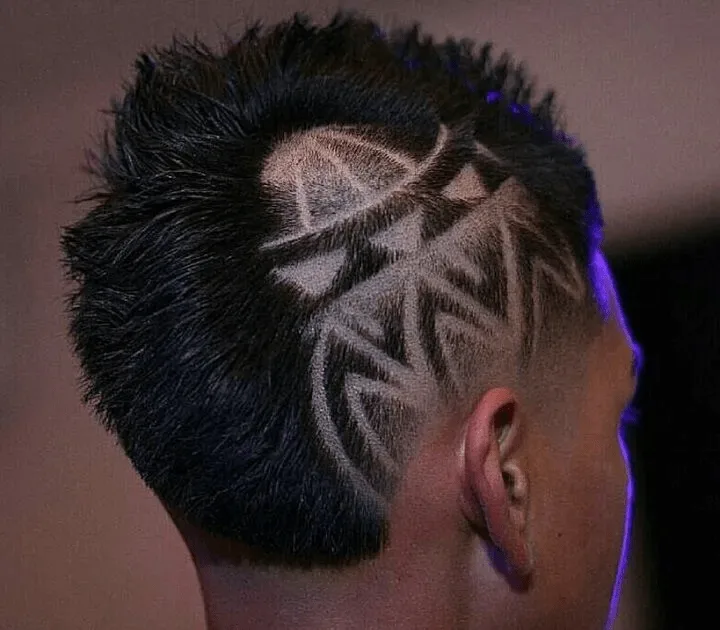
Asymmetry adds attitude. The asymmetrical low taper mullet introduces subtle imbalance — one side slightly longer, the other sharper — which creates movement and draws the eye. It’s artistic, unconventional, and quietly defiant.
Vintage Low Taper Mullet Fade
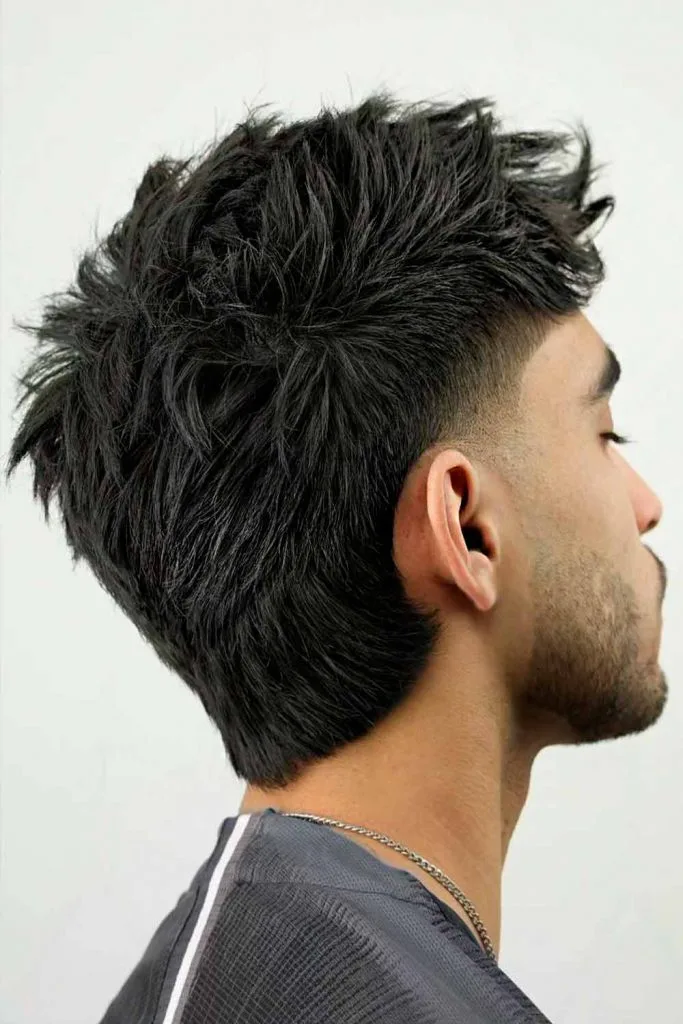
If you crave a bit of nostalgia, the vintage low taper mullet revives that 80s charisma but refines it with cleaner edges. The fade softens the transitions while the back holds that classic length — rhythm and flow, with a little drama, without losing elegance. A good pick if you like retro style with modern precision.
Modern Mullet Low Taper Fade
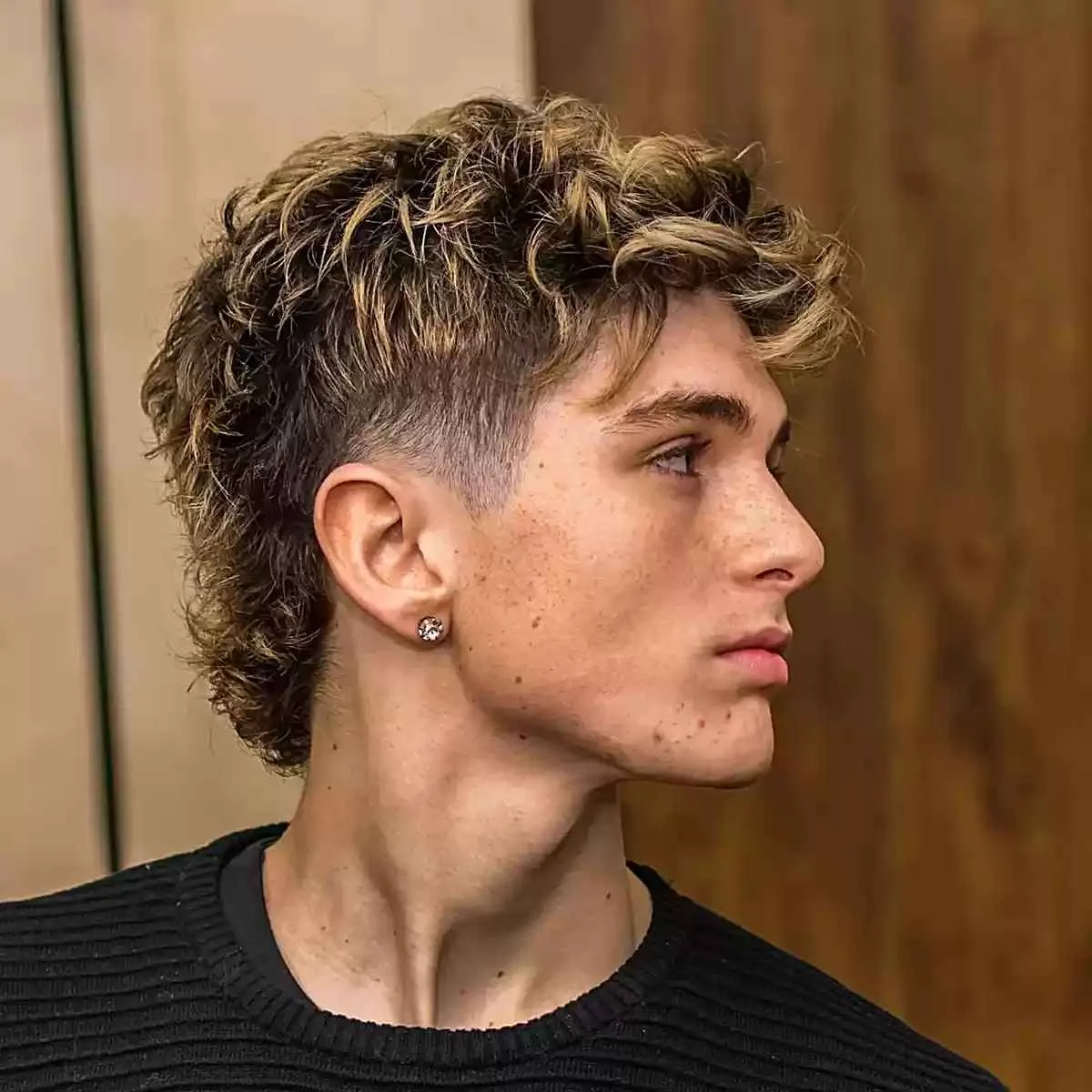
The modern low taper mullet trims the excess of the vintage version for a more sculpted, minimal look. The fade is seamless, the lines softer, the silhouette more wearable — stylish enough for a shoot, simple enough for a Monday meeting. For more symmetry and a cleaner frame, try our middle part taper fade.
Low Taper Mullet Straight Hair
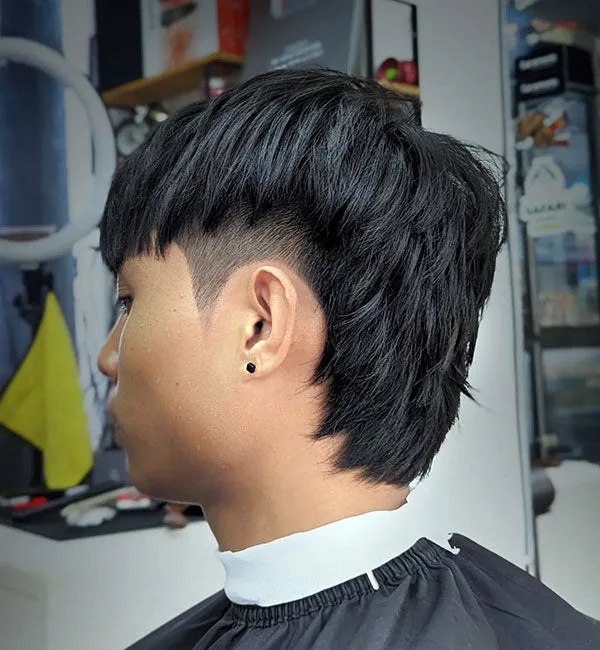
On straight hair, the low taper mullet plays with shape rather than movement. It gives a sleek finish that highlights every angle of the face, and the low taper adds contrast so straight strands look sharp, not flat. A touch of light wax brings definition without weight — perfect for minimalists. For sleek results and everyday styling, read our mid taper fade straight hair guide.
Taper Short Mullet Fade
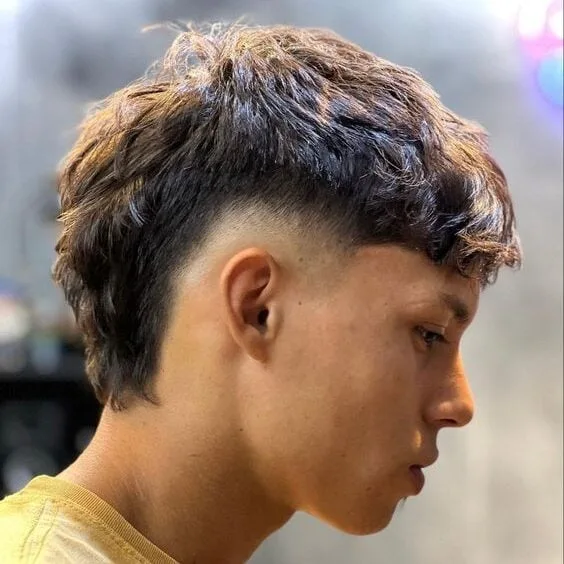
If the longer versions feel too bold, the short mullet fade with a low taper keeps the essence but tones down the flair. The neckline stays tight, the back soft and short — practical for busy lifestyles. Understated, fresh, and ideal if you want a hint of edge without the upkeep.
Mid-Fade Mullet Low Taper
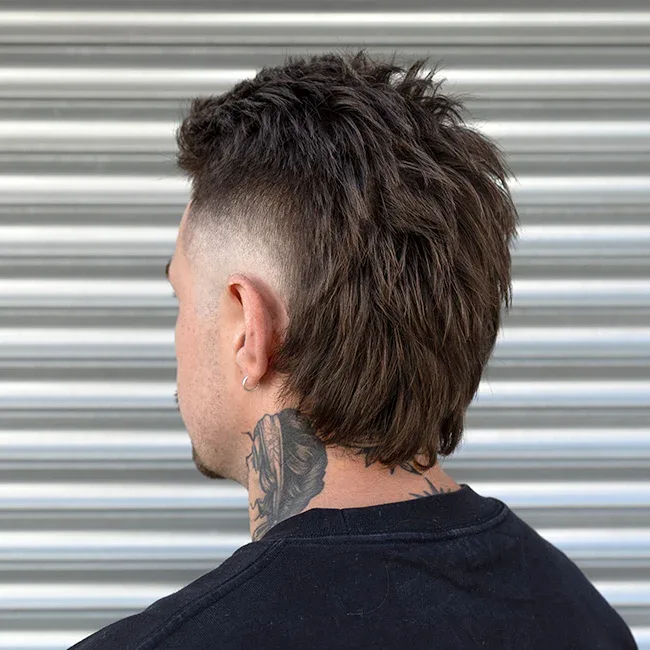
The mid-fade mullet lifts the fade slightly higher, carving a stronger contrast between sides and top — sharper than the short version, with a sportier outline. It’s popular with athletes and gym-goers: clean around the edges, dynamic everywhere else. If you prefer a rounded transition at the back, you’ll like our drop fade haircuts.
Textured Low Taper Mullet Fade
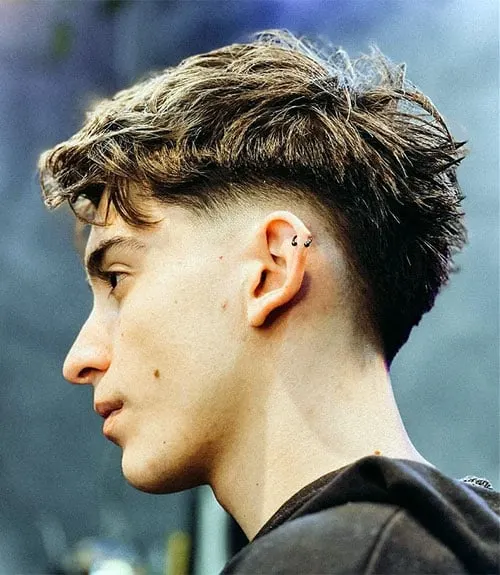
If mid fades feel too strict, the textured low taper mullet brings the flow back — choppy layers, soft waves, and a barely-there fade. It grows out beautifully and looks even better with time. Use a matte clay to play up the texture or let it air-dry for a rugged, natural finish. Want more texture up front? See our low taper fade with textured fringe.
Wavy Low Taper Mullet Fade
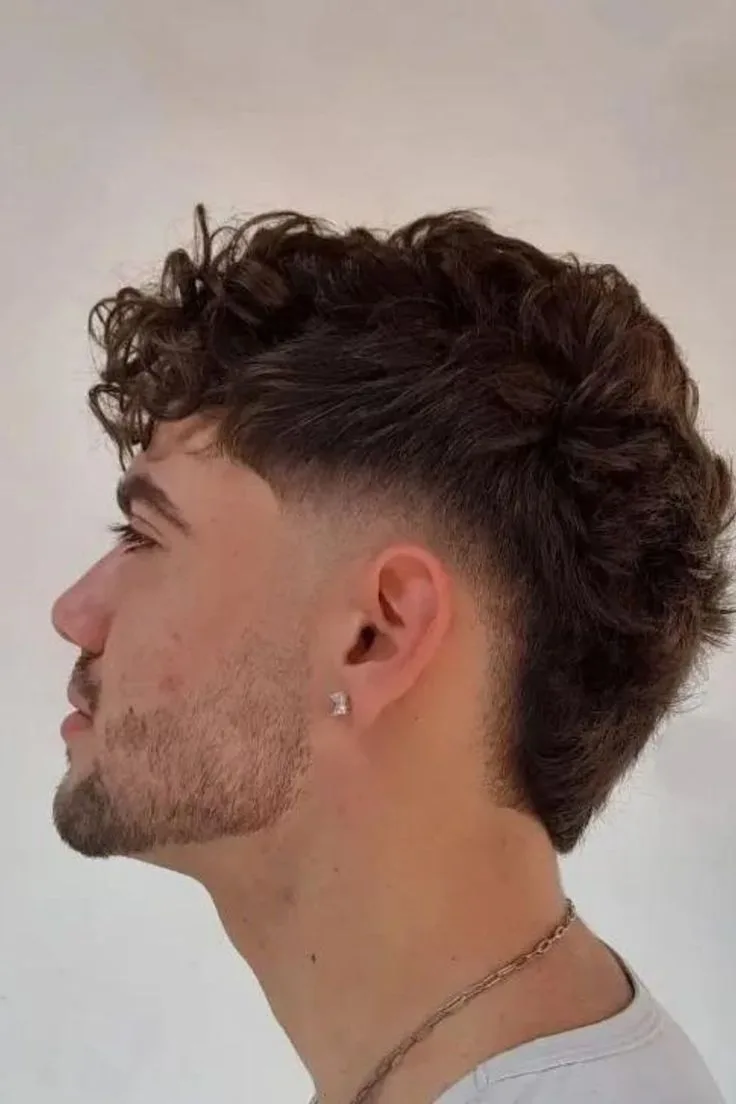
The wavy low taper mullet celebrates that in-between texture, where hair bends but doesn’t coil. The fade defines the sides while the waves cascade into the back — beach energy meets city polish. No two waves fall the same way, which is part of the appeal. If you like natural flow, see our low taper fade wavy haircuts.
Spiky Low Taper Mullet Fade
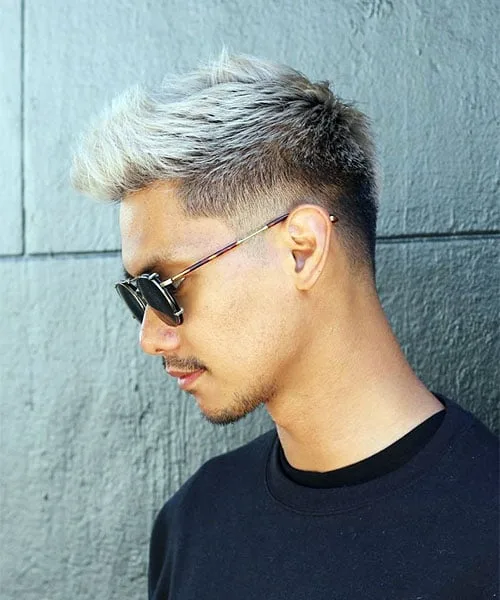
If the wavy version feels too calm, the spiky low taper mullet turns the volume up — short, lifted spikes on top against the softer mullet back. Confident, sharp, and a little rebellious, ideal if you want structure with some energy. A strong-hold paste or fiber wax keeps the spikes going all day. For another statement look, explore our fluffy Edgar cut ideas.
Pompadour Low Taper Fade Mullet
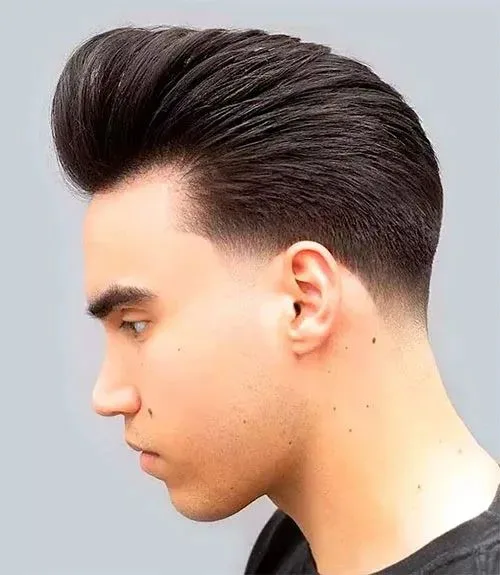
The pompadour low taper mullet adds elegance to the attitude. The top is lifted and swept back, fading into a structured mullet — it commands attention without effort: formal in the front, party at the back. A great hybrid if you like power with polish. Love refined structure? Try our slick back taper fade for a clean, timeless upgrade.
Messy Low Taper Mullet Look
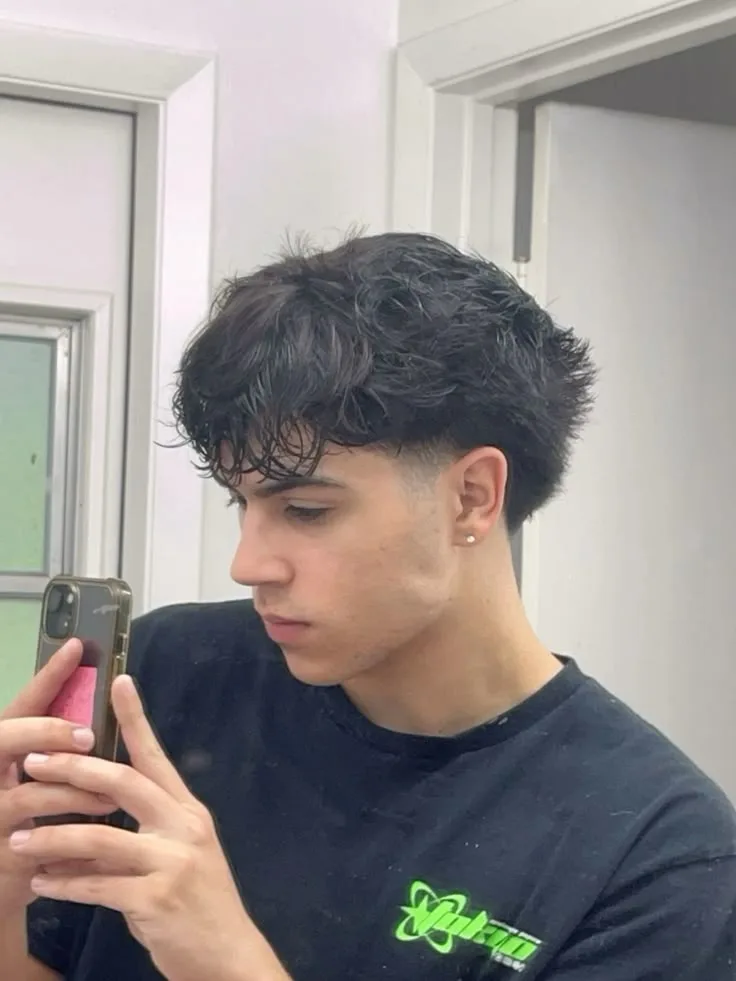
The messy low taper mullet is what happens when you stop overthinking your hair. The fade keeps the shape defined while the rest is finger-styled and loose — spontaneous, youthful, and great for creative tastes. The more imperfect it looks, the better it tends to feel.
Faux Hawk Low Taper Mullet
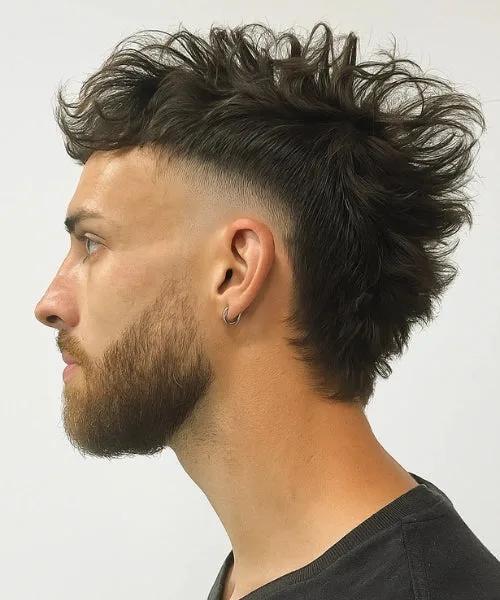
The faux hawk low taper mullet takes the confidence of the pompadour and adds some aggression. The centre stands tall, tapering down the sides into a subtle mullet tail — expressive but balanced, for guys who like sharp silhouettes and bold self-expression.
Braided or Shaved Design Low Taper Look
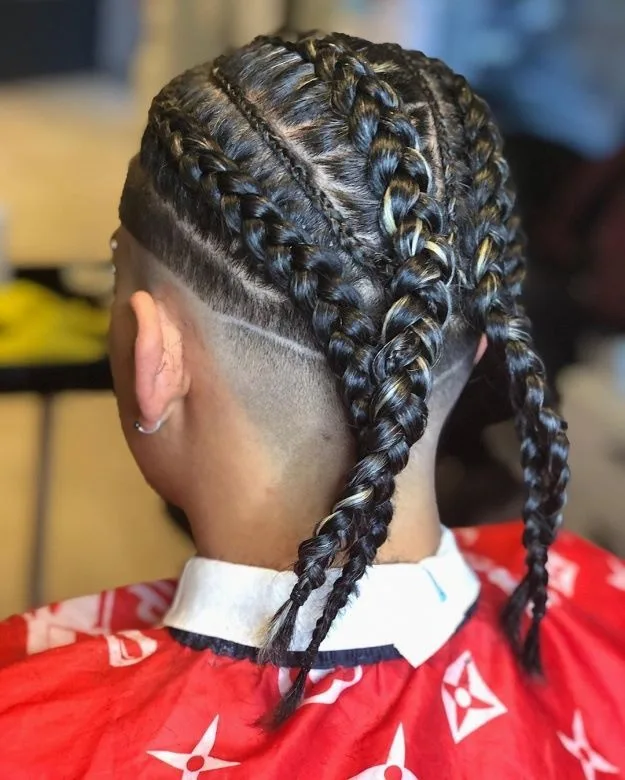
Finally, individuality takes centre stage. The braided or shaved-design low taper mullet turns the cut into a statement — thin braids blending into the taper, or geometric shave lines, every version unique. It’s less about following a trend and more about defining your own. This one closes the circle, from classic to creative.
Maintenance & Styling Tips
- Keep the fade fresh— Trim the neckline and sideburns every 2–3 weeks to maintain that clean taper transition.
- Use the right product for your texture— Matte clay for thick hair, sea salt spray for waves, and lightweight cream for curls.
- Avoid stiffness— Skip heavy gels—they flatten the mullet’s movement and ruin texture flow.
- Protect from heat— Always apply a heat protectant before blow-drying or using a diffuser to preserve shine and structure.
- Night care matters— Sleep on a silk pillowcase or wear a soft cap to reduce friction and fading lines.
- Stay consistent— Ask your barber to blend the taper naturally into your neckline each visit sharp, but never harsh.
How to Ask Your Barber for the Perfect Low Taper Fade Mullet
When you go for a low taper fade mullet, clarity helps. Most barbers love a visual reference, so start by showing a clear photo of the version you want — classic, modern, curly, or textured. Then describe it simply:
“I want a low taper fade that starts just above the ears, blends smoothly into the neckline, and keeps the back slightly longer for a mullet shape.”
That one line tells your barber three key things — the fade height, the blending zone, and the length flow.
Also mention how you style your hair daily — air-dry, blow-dry, or product? It helps your barber decide how to layer and texturize the top. For modern structure, ask for sharper temple fades; for a looser, natural vibe, request a soft blend around the ears and neckline.
Pro tip: before you leave the chair, ask your barber how the cut will grow out. The best low taper mullets are designed to look even better after a few weeks, not just on day one.
Face Shape & Personality Match
Finding the right low taper fade mullet is all about balance — the best version is the one that fits your face and your vibe.
- Oval Face: You’re lucky, almost every mullet works. Try a modern low taper fade mullet or wavy version for a clean, natural look.
- Round Face: Go for height and sharp edges. A spiky low taper fade mullet or pompadour style adds structure and makes your face look longer.
- Square Face: You already have strong lines, so choose softer styles like the curly low taper mullet fade or wavy fade to balance your features.
- Long Face: Avoid too much height. A short taper mullet fade or textured mullet adds width and keeps proportions even.
- Diamond Face:Choose a style that adds fullness near the top, like a modern mullet low taper fade or asymmetrical version.Calm and classic? Go for the short or brushed-back mullet.
Your personality plays a part too: if you’re creative and bold, try an asymmetrical or braided version; for a relaxed, easygoing vibe, go wavy or messy. The right mullet isn’t about trends — it’s about what feels like you.
Common Mistakes to Avoid
- Starting the fade too high — it removes the soft, gradual effect that defines a real low taper fade mullet.
- Harsh blending lines — the fade should flow naturally from top to neckline without sharp contrasts.
- Ignoring your hair type — straight, wavy, and curly hair each need slightly different taper levels to look balanced.
- Letting the back get uneven — too long looks messy, too short throws off the shape.
- Using heavy gels — they weigh down the texture; use light clay or sea salt spray instead for movement.
- Skipping trims — a quick cleanup every 2–3 weeks keeps your fade sharp and fresh.
A smooth, natural blend is what makes the low taper fade mullet look clean and modern. If you prefer a sharper contrast, our skin fade haircuts guide breaks down cleaner, more defined fades.
Frequently Asked Questions (FAQs)
How long does a Low Taper Fade Mullet last before a touch-up?
Usually around 2 to 3 weeks. The fade grows out fast, so a quick trim keeps it sharp and balanced.
Does a Low Taper Fade Mullet work with curly or wavy hair?
Yes! It’s one of the best styles for curly or wavy textures because the fade controls the volume while the back keeps that natural flow.
Is it good for straight hair too?
Absolutely. The low taper fade mullet straight hair version looks sleek and structured perfect if you want a cleaner finish.
What should I tell my barber?
Say: “I want a low taper fade that starts just above the ears and blends softly into the neckline, keeping length in the back for a mullet shape.”
Is it high-maintenance?
Not really. A little styling product and a trim every few weeks are enough to keep it fresh.
Can I combine a beard with this haircut?
Yes, a beard fade that flows into the taper gives a clean, masculine outline.
What styling product works best?
Matte clay for thick hair, curl cream or sea salt spray for wavy hair, and light pomade for straight hair.
How can I make my fade last longer?
Keep your neckline clean with a trimmer and avoid washing your hair daily, this helps the fade stay neat longer.
Does it suit all face shapes?
Yes, but the version matters shorter fades suit long faces, while fuller backs balance round or square shapes.
What makes the Low Taper Fade Mullet special?
It’s the perfect mix of clean and carefree sharp in front, relaxed at the back, and easy to style no matter your hair type.
The low taper fade mullet isn’t just a haircut — it’s a balance of precision and personality, clean where it matters and wild where it counts. It works for every hair type, from straight and sleek to thick curls and natural waves, adapting easily to your lifestyle. Modern and polished or curly and full of movement, it always reads confident and easy. With regular trims, the right product, and a bit of attitude, it grows better with time rather than out of style.
In 2026, men aren’t just following trends — they’re redefining them. The low taper fade mullet proves that looking sharp doesn’t mean losing your edge: professional, relaxed, and bold, all in one look.