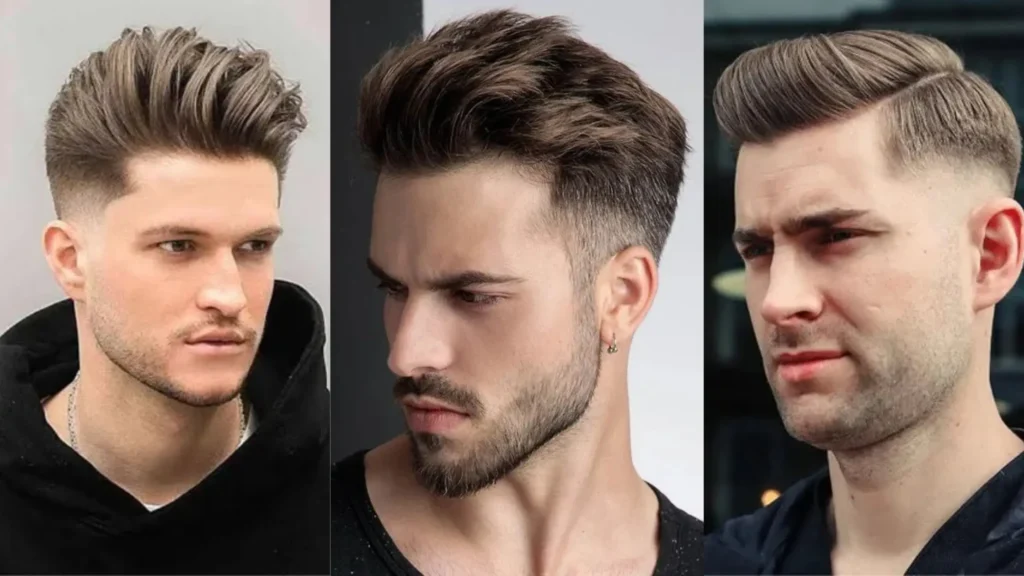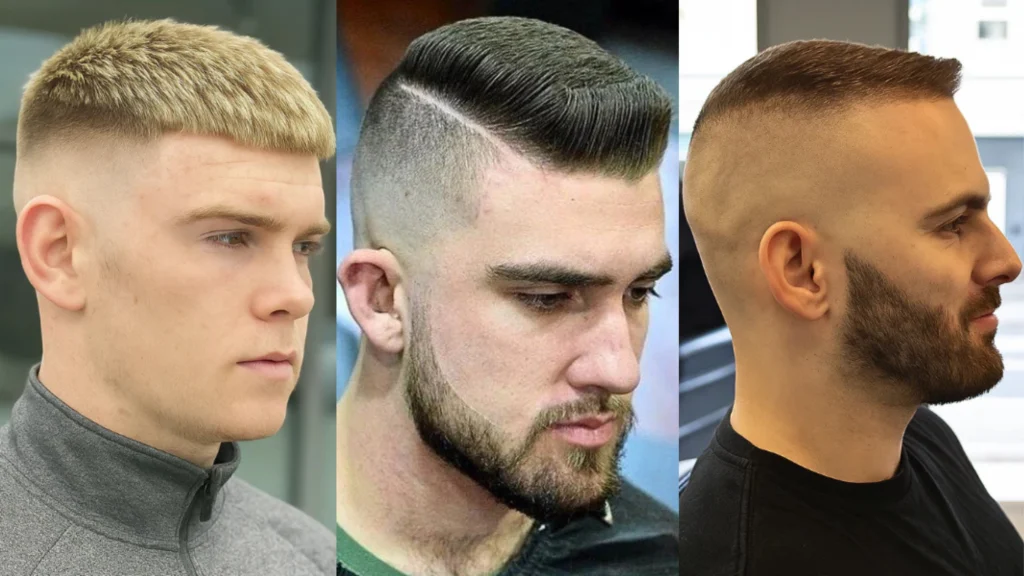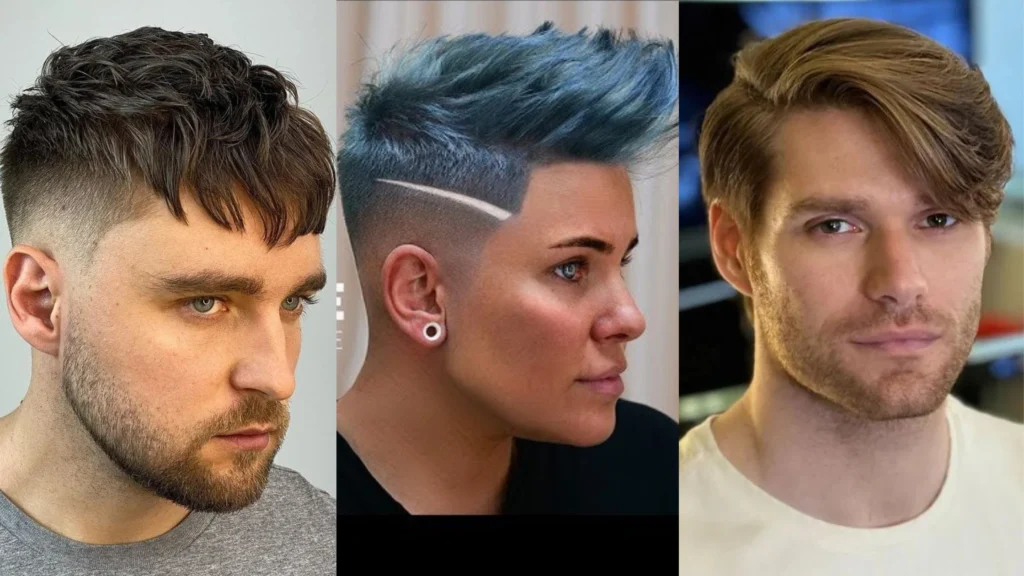
Some haircuts come to define a moment, and the low taper fade fringe is doing exactly that in 2026. It looks sharp without much effort: a clean fade frames the face while a soft fringe adds movement and a bit of attitude up top.
Unlike a high fade that pulls all the focus, the low taper starts low around the ears and blends gently toward the neckline, so everything stays subtle and controlled. It’s quietly become one of the most popular men’s cuts this year. If you’d rather a bolder, tighter fade, our guide to skin fade haircuts for men shows how a close fade changes the whole feel.
The fringe is where the personality comes in. Tousled, neatly textured, or swept to one side, it softens the features and adds easy charm. From short and structured to longer and flowing, it works on straight, wavy, and even curly hair.
It’s a nice balance of precision and freedom — the fade keeps you sharp while the fringe gives you room to do your own thing. Below you’ll find the best versions of the cut, plus barber tips, styling tricks, and face-shape matches to help you find the one that suits you.
What Exactly Is a Low Taper Fade Fringe Haircut?
A low taper fade fringe is a mix of clean edges and soft texture, built around two parts: the fade and the fringe.
The low taper starts just above the ears and fades gradually toward the neckline. It’s lower and softer than a mid or high fade, so you get a neat, balanced shape without losing much length. Want a little more contrast? These mid taper fade haircuts give a sharper edge with the same clean shape. Either way, the sides stay tidy while the top stays full and natural.
The fringe is the front section that falls over your forehead. It can be short, choppy, fluffy, or a little messy depending on your hair and your taste. Paired with the fade, it brings shape, movement, and a modern edge.
It works because it stays clean without being boring. The fade defines the face and jaw while the fringe adds character and a relaxed, youthful feel. It’s easy to maintain, suits all hair types, and fits anywhere from a casual day to the office.
Why It Works So Well on Different Hair Types
The low taper fade fringe works for almost everyone because it fits all hair types and face shapes. If your hair is dead straight rather than wavy or textured, our low taper fade straight hair guide has styles made for you.
- Straight hair, this cut adds movement and style without too much effort. The fade keeps the sides neat, while the fringe gives the top some shape and personality.👉 If you have straight hair and prefer a more structured finish, try the mid taper fade for straight hair — it keeps the same clean flow with a slightly sharper outline.
- Wavy hair, it helps control the volume. The fade removes extra bulk, and the fringe falls naturally over the forehead, giving you that relaxed, beachy look.
- Curly hair, it keeps everything in balance. The fade defines your face, and the fringe lets your curls stand out without looking messy.
It’s clean, easy to manage, and always looks fresh — which is why so many barbers call it the perfect everyday cut.
Key Benefits
- Gives a clean and modern look without being too bold.
- Works well with straight, wavy, or curly hair.
- Low-maintenance and easy to style every day.
- The fade keeps the sides sharp and neat.
- The fringe adds softness and personality.
- Grows out evenly, so it stays stylish longer.
- Helps define your face shape and jawline naturally.
Recommended Styling Products for a Fringe Fade
Things to Keep in Mind
- Keep the fade low and natural for a balanced look.
- Use light styling products to keep the fringe soft and flexible.
- Get a trim every 2–3 weeks to maintain clean lines and shape.
Table of Contents
1. Long Fringes with Low Taper Fade

If you like a haircut that speaks quietly, start with a long fringe over a low taper. The length at the front falls naturally across the forehead, framing the face against clean sides and a smooth neckline. The fade stays low so the fringe takes the spotlight. It’s a great fit for straight or wavy hair when you want movement without losing structure — refined but still full of life.
2. Low Taper Fade with Fringe
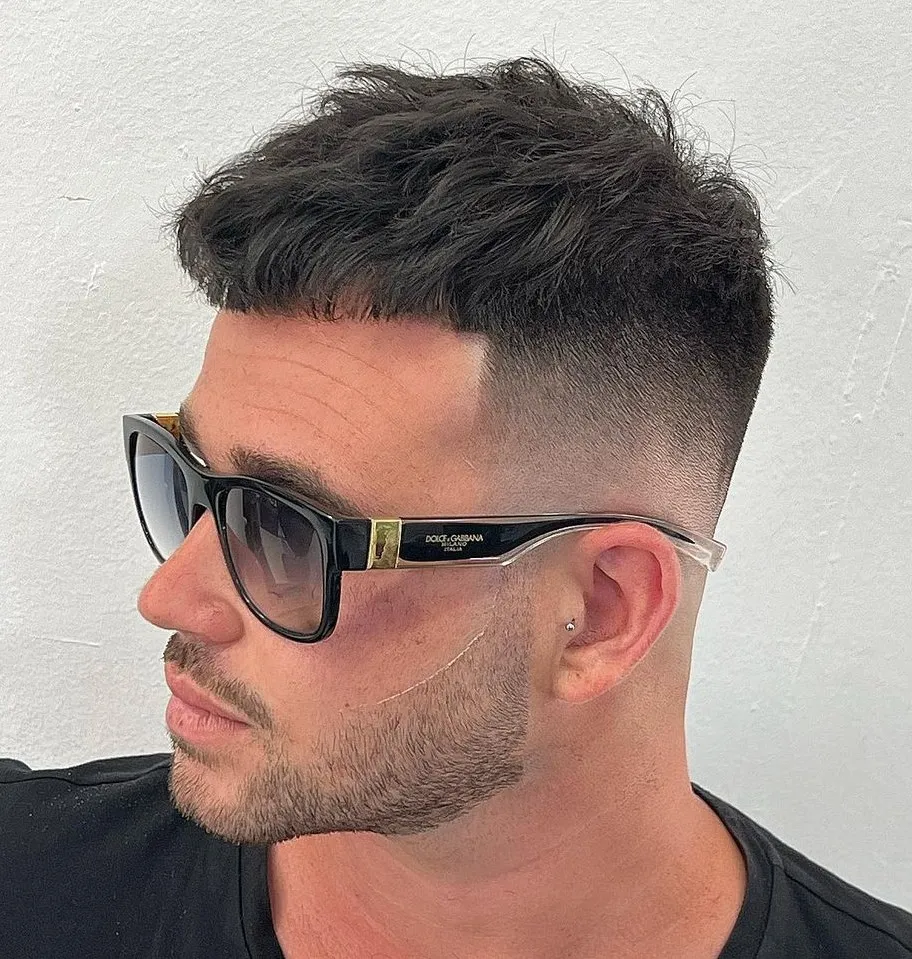
For something sharper, keep the fringe short. The fade starts just above the ears to shape the face while the fringe sits lightly on the forehead. It suits just about any occasion — simple, clean, and balanced — and with minimal product and regular trims it stays looking fresh week to week.
3. Messy Wavy Fringe + Low Taper Fade
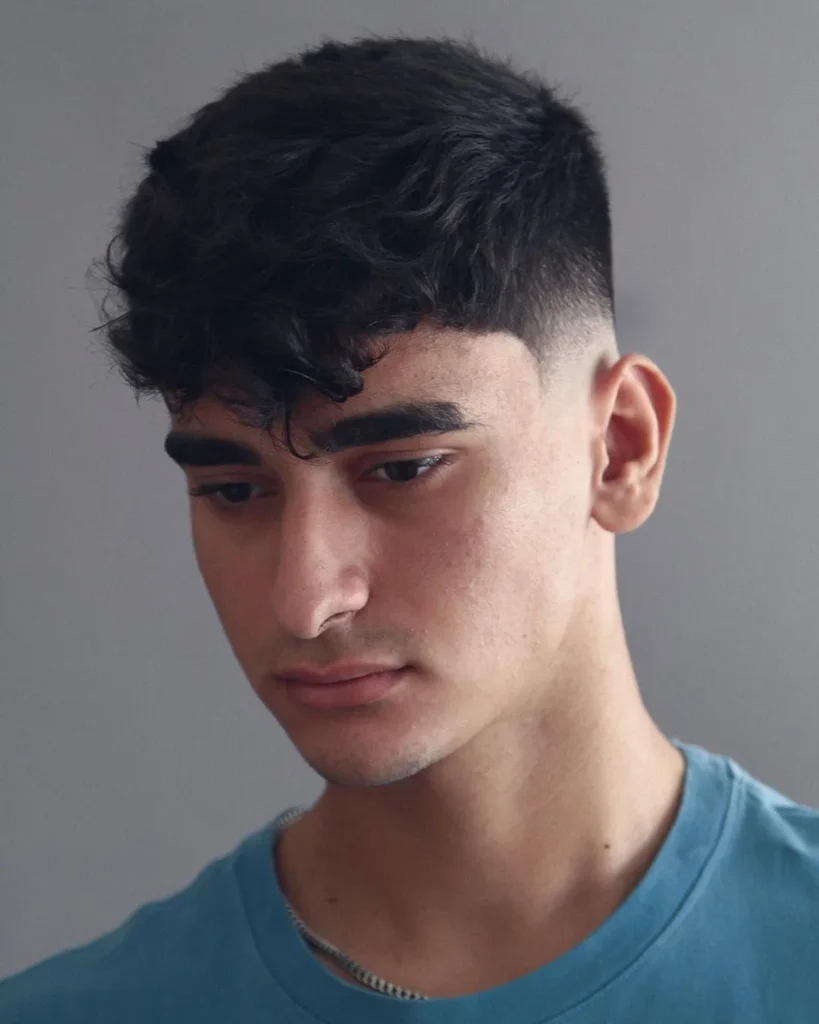
Want something more laid-back? A messy, wavy fringe adds natural texture and charm. The fade takes the bulk off the sides while the waves bring movement on top for that weekend energy. A sea salt spray or light matte cream gives it that beach-ready feel — the kind of messy that still looks intentional.
4. Low Taper Fade Fluffy Fringe
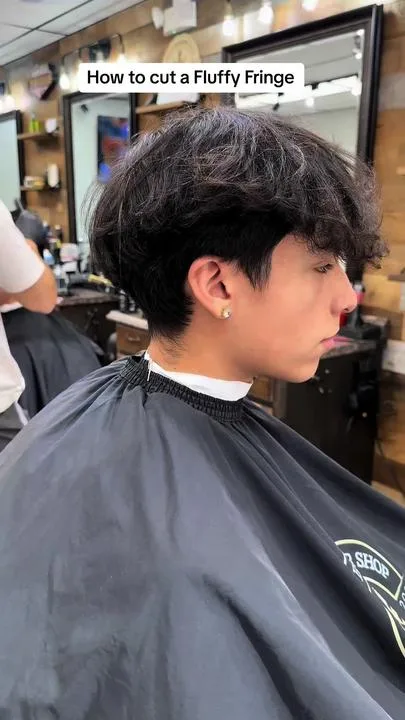
For more lift, a fluffy fringe gives the cut a playful edge. The fringe feels light and full while the low taper keeps things neat around the ears and neckline. It adds height and softness, which flatters medium or thick hair especially well — a good pick if you like a cut that moves with you.
5. Textured Fringe with Low Taper Fade
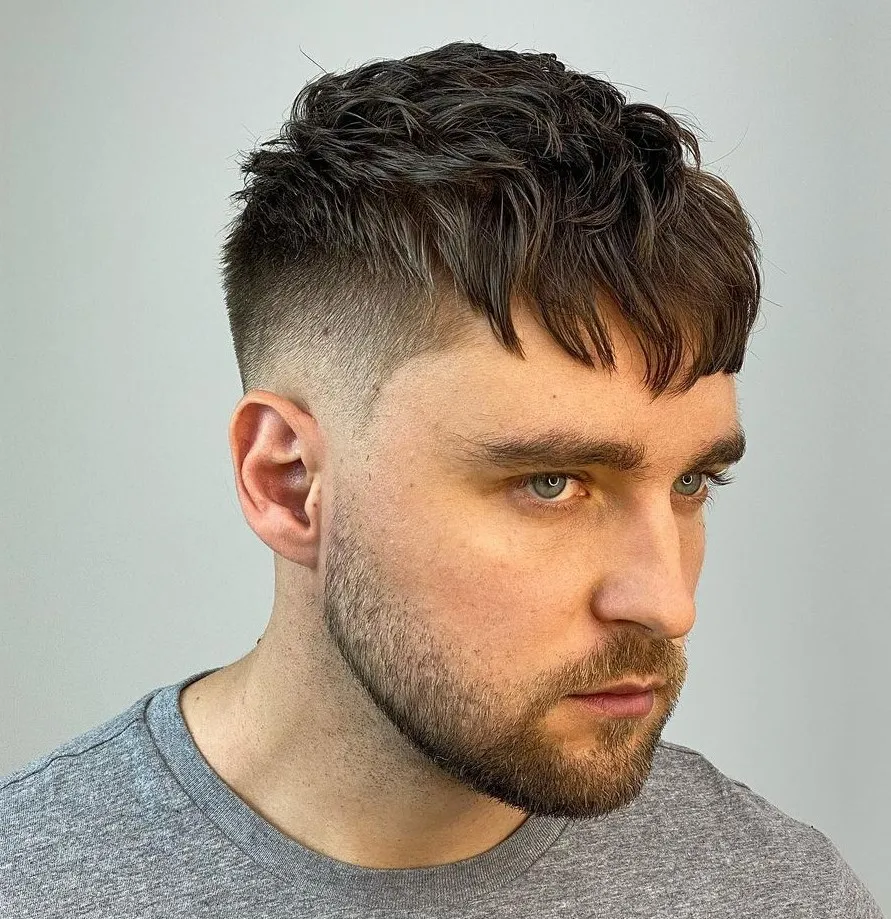
Prefer a bit more structure? A textured fringe brings controlled choppiness without losing the natural look. Small layers across the front create a lived-in texture while the taper cleans up the outline. It’s ideal if you want to look sharp but keep your hair touchable.
6. Side-Swept Fringe with Low Taper Fade
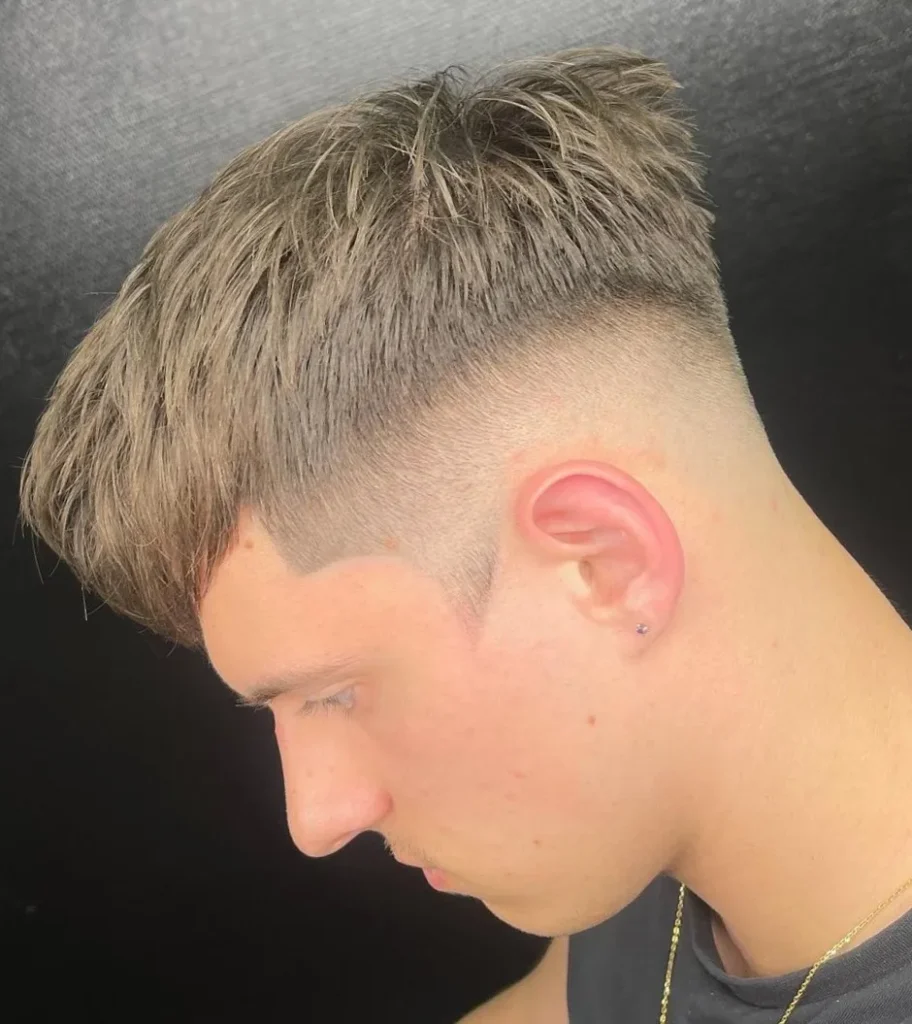
Brush the fringe to one side and you get a smoother, more polished finish. Instead of falling straight down, it sweeps across for soft movement that frames the eyes, while the fade keeps the edges tight. It’s a great look for straight or slightly wavy hair — calm, confident, and easy to wear every day.
7. Angular Fringe with Low Taper Fade
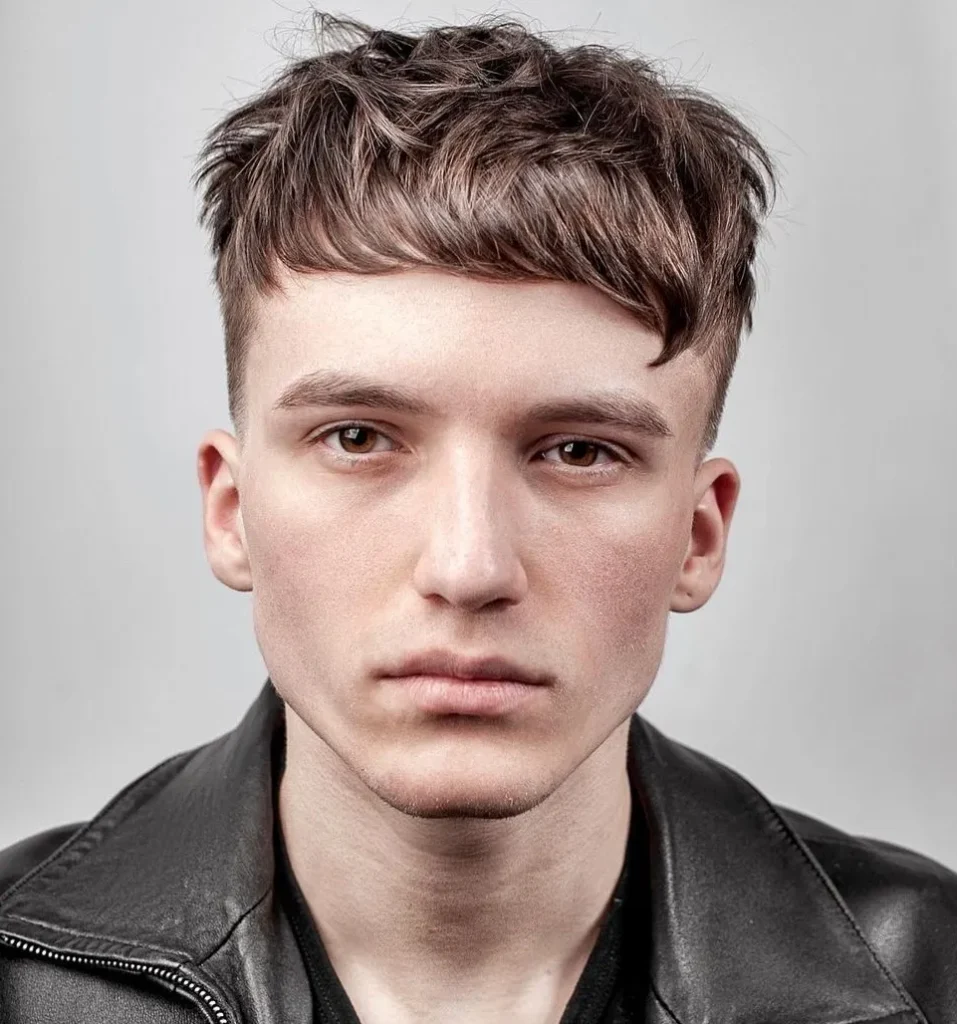
If side-swept feels too soft, go angular. The fringe is cut diagonally across the forehead, creating lines that play up your cheekbones and jaw, while the low taper balances the boldness with smooth, gradual sides. It’s a nice middle ground between soft styling and something more structured.
8. Low Taper Fade with Blunt Fringe
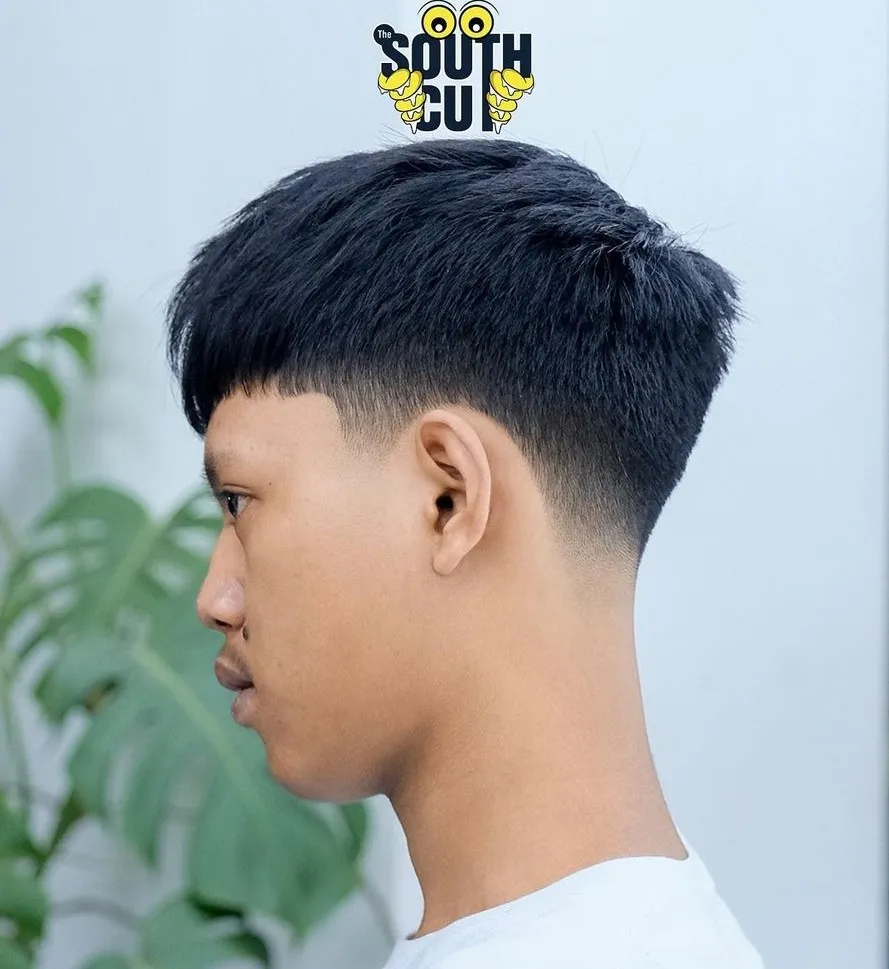
For clean lines over movement, a blunt fringe cut straight across the forehead gives modern precision. It forms a bold frame that contrasts nicely with the soft fade below, and it pairs well with straight or fine hair — minimalist and sleek, for anyone who likes a cut that commands quiet attention.
9. Curly Fringe with Low Taper Fade
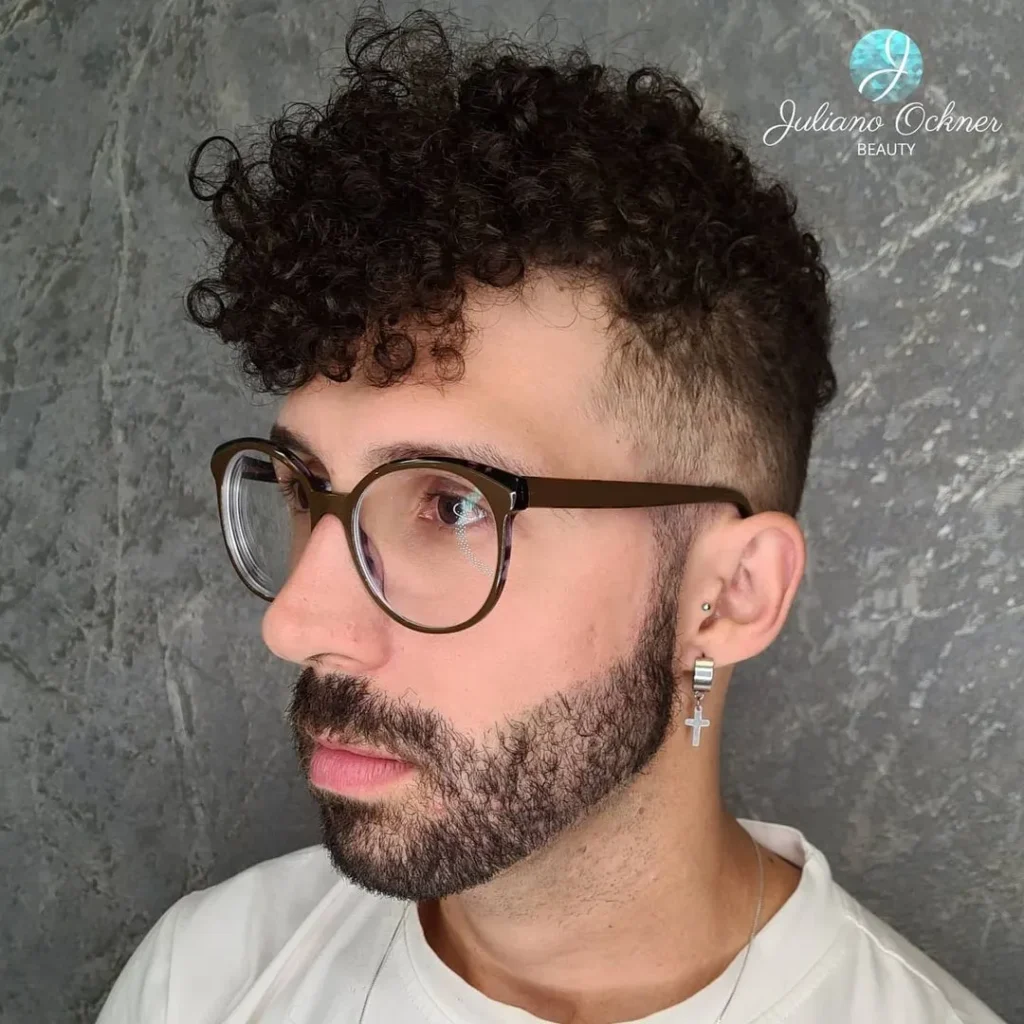
A curly fringe brings everything back to natural texture. The fade defines the face while soft curls up front add volume and movement — full of personality, and great if you want your curls to stand out without looking bulky. The fringe strikes a balance between control and freedom.
10. Shaggy Fringe with Low Taper Fade
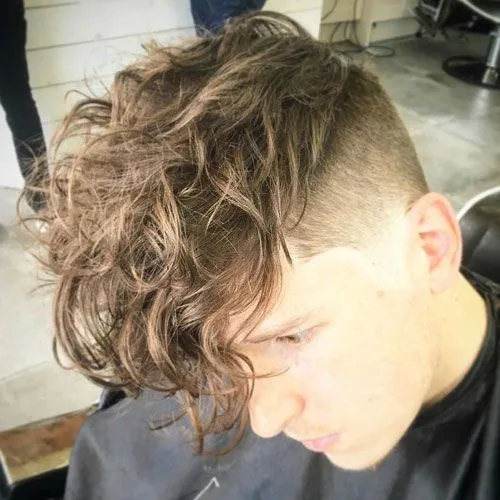
A shaggy fringe leans into imperfection: uneven layers, soft edges, and easy flow. The low taper keeps the sides clean while the shaggy top adds texture and life — lived-in but still polished, with a bit of a rock-inspired feel.
11. Disconnected Fringe with Low Taper Fade
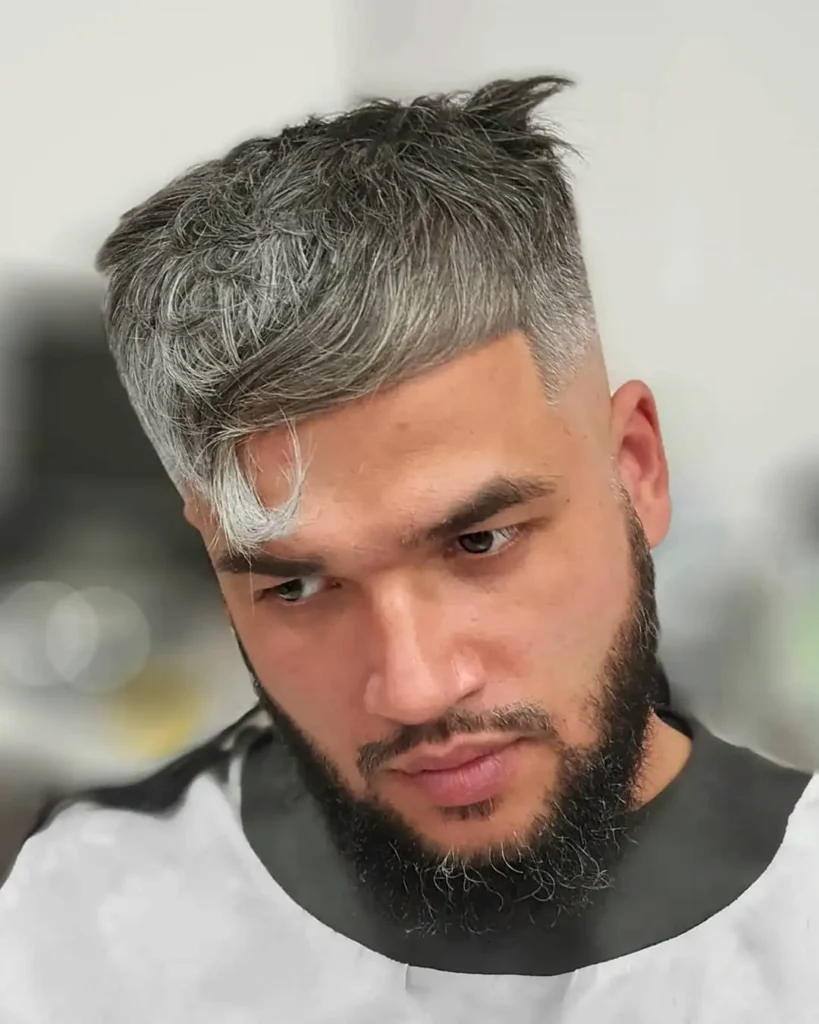
A disconnected fringe brings contrast and structure. The clear break between top and sides gives the cut a sharp, standout edge: the fade drops low around the ears while the fringe stays longer and defined. It’s bold without being overdone — a clean outline with a little creative flair.
12. Layered Fringe with Low Taper Fade
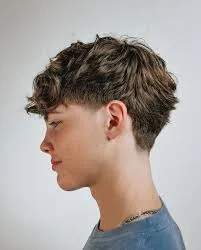
A layered fringe adds movement and balance, with different lengths through the front giving natural texture and direction while the taper keeps the sides crisp. It works best on medium to thick hair, since the layers lighten the weight but keep the volume up top — an easy, adaptable everyday cut.
13. Pompadour Fringe with Low Taper Fade
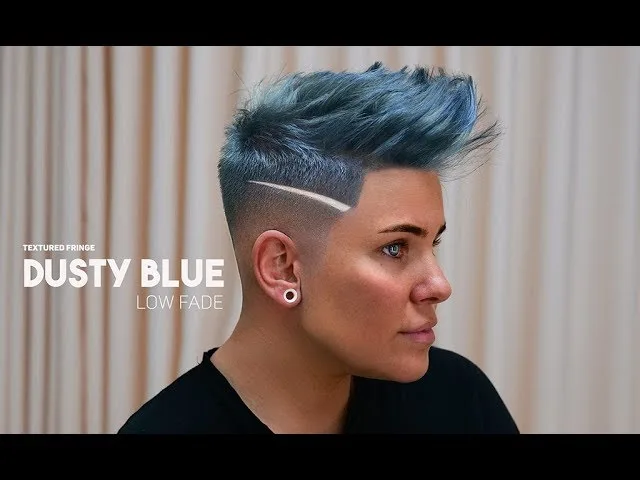
For height and a bit of classic flair, lift the fringe into a pompadour instead of letting it fall forward. It blends the volume of a pompadour with the neat shape of a low taper — confident, mature, and versatile. The fade keeps it grounded so the volume never takes over.
14. Soft-Fringed and Low Taper Fade
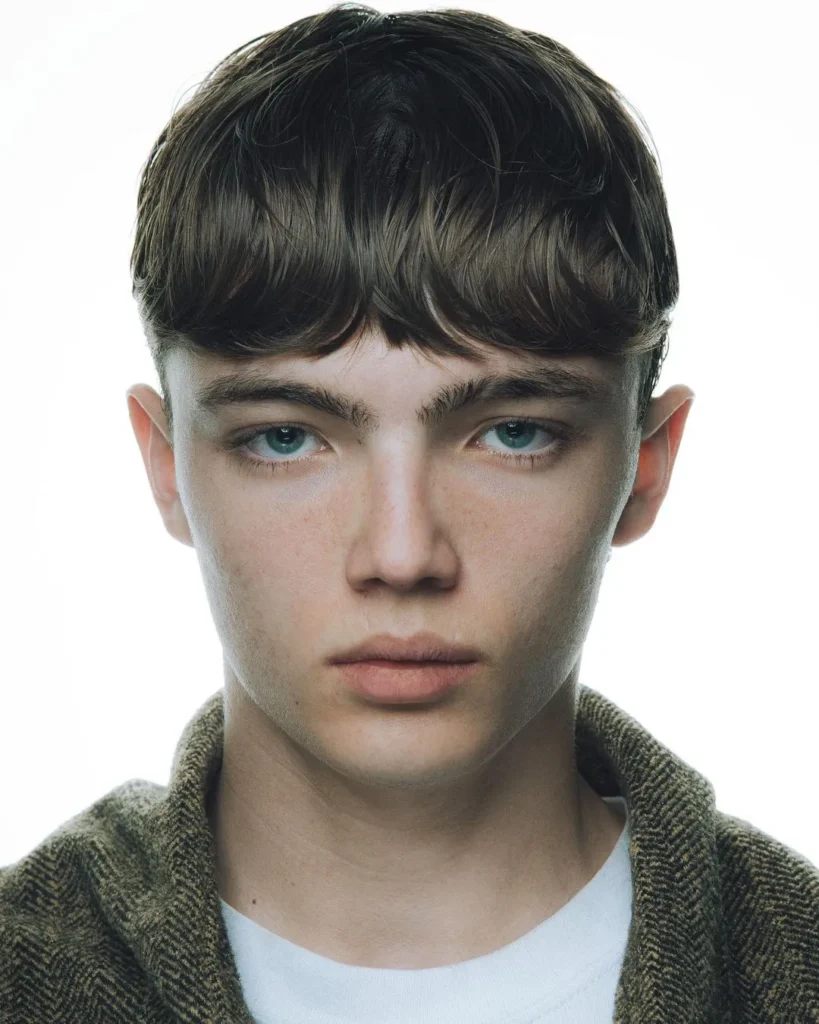
For something more subtle, keep the fade smooth and the fringe light, resting gently on the forehead. It’s easy to maintain, timeless, and suits any age. The soft fringe adds a little warmth to the face for a calm, natural feel.
15. Wispy Fringe with Hair Taper Fade
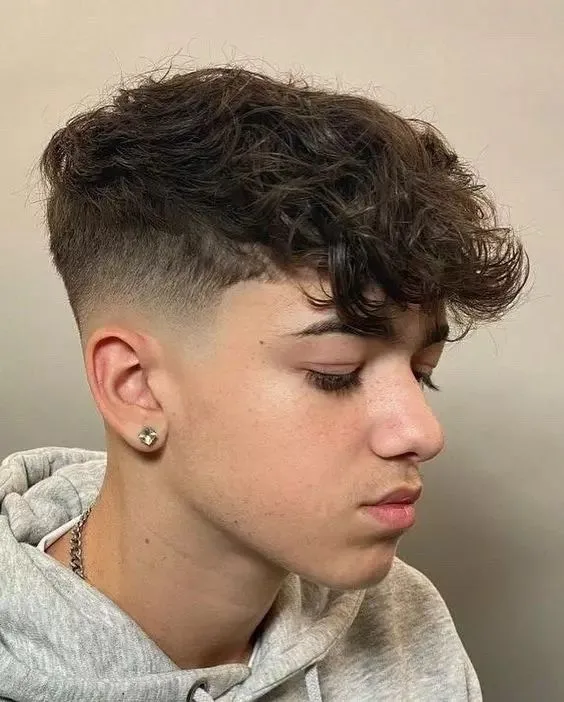
A wispy fringe is all about simplicity and detail — thin, feathered strands falling softly across the forehead for a light, airy finish. The taper underneath blends so smoothly it’s almost invisible, just enough to shape the face. Subtle, stylish, and very easy to wear day to day.
Maintenance & Styling Tips
Keeping a low taper fade fringe sharp doesn’t take much — just consistency and the right routine.
- Trim every 2–3 weeks to keep the fade lines clean and the fringe in shape. Regular touch-ups help the haircut grow evenly without losing its form.
- Use light styling products like matte clay, texture spray, or volumizing mousse depending on your hair type. Avoid heavy gels, they stiffen the fringe and flatten your texture.
- If you have wavy or curly hair, use a leave-in conditioner or curl cream to control frizz and keep the waves defined.
- Always use a heat protectant before blow-drying to maintain smoothness and prevent dryness.
- For volume, blow-dry your fringe forward or upward depending on your preferred look ,fluffy, textured, or neat.
- Sleep on a silk pillowcase to reduce friction and keep your fade lines sharper for longer.
- In humid weather, apply a matte finish product to control shine and puffiness while keeping a natural texture.
With a bit of care, it grows out well, keeping you looking fresh and well-groomed week after week.
Want more ideas? Take a look at our guides to low taper fade wavy haircuts and the modern mullet with low taper.
How to Ask Your Barber for the Perfect Low Taper Fade Fringe
Getting it right starts with clear communication. Barbers appreciate when you know the details — it helps them match the cut to your hair type and face shape.
- Start by saying you want a low taper fade that begins just above the ears and blends softly toward the neckline. This keeps the fade subtle and clean.
- Then mention you want a fringe on top, it can be textured, fluffy, messy, or straight, depending on the look you prefer.
- Show a photo reference to help your barber understand your style goals, whether you like a low taper fade with textured fringe, a messy wavy fringe, or a short structured version.
- Tell your barber if you blow-dry or air-dry your hair, since this affects how the fringe should be layered.
- Finally, ask to keep the fade low and natural, avoiding hard lines, so the haircut grows out smoothly.
With a clear explanation and a photo, your barber can tailor it to your hair, lifestyle, and taste.
Face Shape and Personality Match
It looks good on everyone, but the right version depends on your face shape and style.
- Round Face: Choose styles that add height, like the angular fringe or pompadour fringe. Keep the sides short to make your face look longer.
- Square Face: Go for softer looks such as the textured or side-swept fringe. They balance a strong jawline and add natural movement.
- Oval Face: You’re lucky almost every low taper fade fringe suits you. Try fluffy, messy, or layered versions for variety.
- Long Face: Pick a style that adds width, not height. A soft or curly fringe works best to balance your features.
- Diamond or Triangular Face: Add volume at the top with a long or disconnected fringe to soften sharp cheekbones.
Personality plays a part too: if you like bold, go angular or disconnected; for something calmer and classic, try a side-swept or soft fringe.
Common Mistakes to Avoid
- Starting the fade too high — it removes the soft, natural look of a true low taper fade.
- Uneven blending — harsh lines ruin the smooth transition between top and sides.
- Ignoring your hair type — thick, straight, or curly hair each needs a different approach.
- Using heavy gels — they make the fringe stiff and lifeless.
- Skipping regular trims — the shape fades fast if you don’t touch up every few weeks.
Keep it clean, natural, and balanced — that’s when it looks its best.
Personality Match
It fits every personality; it just comes down to how you style it.
- Polished and Calm: Go for a classic side-swept or soft fringe for a clean, everyday look.
- Creative and Bold: Try the angular, disconnected, or pompadour fringe to stand out with confidence.
- Relaxed and Natural: A messy wavy or fluffy fringe gives off effortless, laid-back energy.
Whatever your vibe, there’s a version that matches — stylish, simple, and always fresh.
Frequently Asked Questions (FAQs)
How long does a Low Taper Fade Fringe last before a touch-up?
Usually around 2 to 3 weeks. The fade starts to grow out first, so a quick trim keeps it looking clean and sharp.
Is the Low Taper Fade Fringe good for all hair types?
Yes. It works well with straight, wavy, or curly hair, you just need to style it differently for each texture.
Can I get a Low Taper Fade if I have curly or thick hair?
Absolutely. The fade helps manage bulk, and the curly fringe adds a soft, natural look without too much volume.
What’s the difference between a Low Taper Fade and a Mid Fade?
A low taper fade starts just above the ears, while a mid fade begins higher up around the temples. The low fade gives a more subtle, classic look.
How do I style a Low Taper Fade Fringe at home?
Use matte clay or sea salt spray for natural texture. Blow-dry your fringe forward or slightly to the side depending on the look you want.
Can a Low Taper Fade Fringe make my face look slimmer?
Yes. The fade cleans up the sides, and the fringe can be shaped to highlight your cheekbones or elongate your face.
What products are best for styling a Low Taper Fade Fringe?
Light matte creams, texture sprays, or mousse work best. Avoid heavy gels that make the fringe stiff.
Is the Low Taper Fade Fringe suitable for professional settings?
Definitely. The low fade keeps it clean and formal, while the fringe adds a stylish edge that still looks professional.
Can I pair a beard with a Low Taper Fade Fringe?
Yes. A beard fade that connects smoothly with your haircut creates a balanced, well-groomed look.
How can I make my Low Taper Fade Fringe last longer?
Keep your neckline clean with a trimmer, use mild shampoo, and sleep on a silk pillowcase to prevent frizz and preserve the fade lines.
The low taper fade fringe isn’t just another trend — it’s a cut that blends precision, personality, and everyday confidence. Textured, messy, or fluffy, it gives you room to express yourself while staying clean and low-maintenance, and it works with any hair type, face shape, and lifestyle.
So next time you’re in the chair, show your barber the version that matches your vibe — the best styles aren’t copied, they’re personalised.
Save this guide before your next barber visit and show them your favourite version from the list.